Mutual Fund screeners are available on countless websites and trading platforms. They allow users to choose trading instruments that are suitable for certain criteria profile.
American investors, covering the past decade, have conclusively come around to mutual funds so they may save towards their retirement as well as other financial targets.
The possible choices for investing in a mutual fund is less complicated than you think.
Mutual fund charges and costs are fees that may be acquired by investors who possess mutual funds
The following strategies are used to trade ETFs.
A closed-end fund is a publicly traded investment company that raises a fixed amount of capital through an initial public offering (IPO). The fund is then structured, listed and traded like a stock on a stock exchange.
An open end mutual fund don’t have limits on the quantity of shares the fund will issue. Provided that demand is requested often, the fund will continue to issue shares no matter the number of investors.

A tool that investors and traders can use to filter ETFs based on user-defined metrics. ETF screeners are offered on many websites and trading platforms, and they allow users to select trading instruments that fit a certain profile set of criteria.
A load mutual fund comes with a sales charge or commission.
A no-load mutual fund in which shares are sold without a commission or sales fee. The notion for this is that the shares are allocated directly by the investment company, rather than going through a alternate party.
A Spider ETF is a summary of Standard & Poor’s depositary receipt, an exchange-traded fund (ETF) administered by State Street Global Advisors.
Exchange-traded funds that invest in physical commodities such as natural resources, agricultural goods as well as precious metals.
A group of risks combined with investing in a foreign country.
A type of mutual fund with a portfolio constructed to match or track the components of a market index, such as the Standard & Poor’s 500 Index (S&P 500). An index mutual fund is said to provide broad market exposure, low operating expenses and low portfolio turnover.
What are the differences between investing in Exchange Traded Funds verses stocks? This article will discuss the pros and cons …
Your goal should be to build and manage a diversified portfolio of stocks and bonds with the lowest possible fees and the greatest possible tax efficiency. ETFs offer seven advantages over index mutual funds: lower cost, greater tax efficiency, better tax management, easier asset allocation, easier portfolio rebalancing, no fraud and you can short ETFs.

An options strategy by which an investor retains a long position in an asset and writes or sells a call options on an identical in an effort to produce an increased income from the asset.
There are many investment errors that are easy to avoid. This list of Common Investment Mistakes will help the beginner save money.

A revenue or expense stream that changes a cash account over a given period. Cash inflows usually arise from one of three activities – financing, operations or investing – although this also occurs as a result of donations or gifts in the case of personal finance. Cash outflows result from expenses or investments. This holds true for both business and personal finance.

Dollar Cost Averaging is the method of purchasing a fixed dollar amount of one particular investment at regular period of times, regardless of the share price.

Fundamental analysis is the process of looking at the basic or fundamental financial level of a business, especially sales, earnings, growth potential, assets, debt, management, products, and competition.
A stock investing tactic where you purchase the ten DJIA stocks with the highest dividend yield at the start of each year.

The first sale of stock by a private company to the public. IPOs are often issued by smaller, younger companies seeking the capital to expand, but can also be done by large privately owned companies looking to become publicly traded.
There are many research tools available and many of them are free. Of course, there are some very sophisticated tools that come with hefty price tags; however, for most investors all the research they’ll need is free or available for a modest subscription.
Steps to consider as you make your first trade.
Stocks are shares in ownership of a company. Stocks represents a claim on the company’s assets and earnings. As you increase your holdings of a stock, your ownership stake in the company increases. Whether you say shares, equity, or stock, it all means the same thing.
A Trading Halt is the temporary suspension of trading of a security for a specific period of time. Trading Halts typically last for an hour, but can extend into days.

Time Decay is the inclination for options to decrease in worth as the expiration date draws near. The extent of the time decay is inversely connected to the changeability of that option.
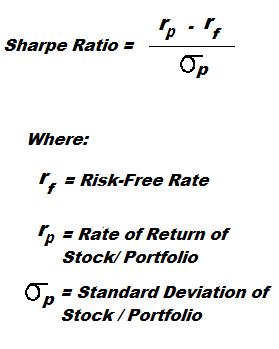
A Sharpe Ratio calculates the extra return you make compared to the extra risk you take on.
Everyone has their favorite stock market myths but here are a few you might like to add to the collection:
Factors that contribute to selecting your trading strategy include: personality, goals, amount of investment capital and comfort zone.

Capital Asset Pricing Model (CAPM) is a method used by investors to prioritize what stocks to invest in, given their limited cash.
The basic form of short selling is selling stock that you borrow from an owner and do not own yourself. In essence, you deliver the borrowed shares. Another form is to sell stock that you do not own and are not borrowing from someone. Here you owe the shorted shares to the buyer but “fail to deliver.”

The cash received from the short sale of a security. The interest return from investment of the short proceeds is usually divided between the short seller, who gets partial “use of proceeds,” and the securities lender.

In finance, short selling (also known as shorting or going short) is the practice of selling securities or other financial instruments, with the intention of subsequently repurchasing them (“covering”) at a lower price. In the event of an interim price decline, the short seller will profit, since the cost of repurchase will be less than the proceeds received upon the initial (short) sale. Conversely, the short seller will incur a loss in the event that the price of a shorted instrument should rise prior to repurchase.

Buying on margin is borrowing money from a broker to purchase stock.

Cash flow per share shows the after-tax earnings plus depreciation, on a per share basis. Many financial analysts place more emphasis on the cash flow per share value than on earnings per share values.

Form 10-Q, is also known as a 10-Q or 10Q, is a quarterly report mandated by the United States federal Securities and Exchange Commission, to be filed by publicly traded corporations.

Companies with more than $10 million in assets and a class of equity securities that is held by more than 500 owners must file annual and other periodic reports, regardless of whether the securities are publicly or privately traded. Up until March 16, 2009, smaller companies could use Form 10-KSB. If a shareholder requests a company’s Form 10-K, the company must provide a copy. In addition, most large companies must disclose on Form 10-K whether the company makes its periodic and current reports available, free of charge, on its website. Form 10-K, as well as other SEC filings may be searched at the EDGAR database on the SEC’s website.
An order placed with a broker to sell a security when it reaches a certain price. A stop-loss order is designed to limit an investor’s loss on a security position.
A stop order is an order to buy or sell a stock when the stock price reaches a specified price, which is known as a stop price. When the specified price is reached, the stop order becomes a market order.

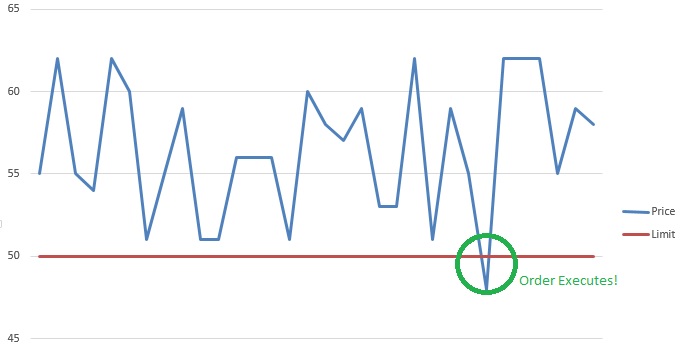
A limit order is an order to buy or sell a stock at a specific price or better. A buy limit order can only be executed at the limit price or lower, and a sell limit order can only be executed at the limit price or higher. A limit order is not guaranteed to execute. A limit order can only be filled if the stock’s market price reaches the limit price. While limit orders do not guarantee execution, they help ensure that an investor does not pay more than a pre-determined price for a stock.

A market order is an order to buy or sell a stock at the best available price. Generally, this type of order will be executed immediately. However, the price at which a market order will be executed is not guaranteed. It is important for investors to remember that the last-traded price is not necessarily the price at which a market order will be executed. In fast-moving markets, the price at which a market order will execute often deviates from the last-traded price or “real time” quote.

The price a seller is willing to accept for a security, also known as the offer price. Along with the price, the ask quote will generally also stipulate the amount of the security willing to be sold at that price.
Sometimes called “the ask.”
When you are selling your shares of a security, the bid price is what the buyer is willing to pay for your shares. This Bid Price offers you an exact price of how much you can sell your shares for.
The price to earnings ratio is a useful tool but certainly not the holy grail of investing as it is sometimes made out to be.

A financial ratio that shows how much a company pays out in dividends each year relative to its share price. In the absence of any capital gains, the dividend yield is the return on investment for a stock. The formula is Annual Dividends Per Share divided by Price Per Share.

Dividends are payments made by a corporation to its shareholder members. It is the portion of corporate profits paid out to stockholders. When a corporation earns a profit or surplus, that money can be put to two uses: it can either be re-invested in the business (called retained earnings), or it can be distributed to shareholders. There are two ways to distribute cash to shareholders: share repurchases or dividends. Many corporations retain a portion of their earnings and pay the remainder as a dividend.

Preferred stock is a special class of stock issued by a company that pays dividends. Preferred stock is more like a bond than true stock because the main appeal is dividend income. Most preferred stocks are limited in the total profit they can earn.

Common stock is a form of corporate equity ownership, a type of security. The terms “voting share” or “ordinary share” are also used in other parts of the world; common stock being primarily used in the United States. It is called “common” to distinguish it from preferred stock.

By law, every year, mutual funds must distribute that year’s net investment income (the total of dividends and interest received, less fund expenses) and net realized gain (gains less losses on securities sales) to its shareholders. These distributions are taxable income reported to the IRS on Form 1099. Investors must report the income on their tax returns. This poses a problem for some mutual fund investors who make initial purchases of mutual funds near the end of a calendar year. Because they receive a capital gains distribution, they immediately receive taxable income and face a mutual fund NAV that is reduced from the distribution.

Profit or loss resulting from the sale of certain assets classified under the federal income tax legislation as capital assets. This includes stocks and other investments such as investment property.

A Call Option gives the holder the right, but not the need to purchase a fixed quantity of a particular stock at a specific price inside a particular time. Call Options are bought by investors who anticipate a price increase.

Stocks of leading and nationally known companies that offer a record of continuous dividend payments and other strong investment qualities.

Trades greater than or equal to 10,000 shares in size and greater than or equal to $100,000 in value.

A measurement of the relationship between the price of a stock and the movement of the whole market. An asset has a beta of zero if it moves are not related to the benchmark’s moves. A positive beta means that the asset generally follows the benchmark, in the sense that the asset tends to move up when the benchmark moves up, and the asset tends to move down when the benchmark moves down. A negative beta means that the asset typically moves in the opposite direction as the benchmark: the asset tends to move up when the benchmark moves down, and the asset tends to move down when the benchmark moves up.

The tendency of the stock market to trend higher over time. It can be used to describe either the market as a whole or specific sectors and securities. The opposite of a Bull Market is a Bear Market when the market is moving lower over time.
The tendency of the stock market to trend lower over time. It can be used to describe either the market as a whole or specific sectors and securities.

When an option’s strike price is identical to the price of the security. Both call and put options will be simultaneously “at the money.” For example, if the ABC stock is trading at 75, then the ABC 75 call option is at the money and so is the ABC 75 put option. An at-the-money option has no intrinsic value, but may have time value (value if the stock goes up during the period of the option). Options trading activity tends to be most active when options are at the money.

When you place an order to buy stocks that must be filled completely, with the total quantity requested, or the trade should not execute at all.

Technical Analysis is the use of technical indicators comprising of statistics using past market information to predict which direction the security price will move.

Trailing Stop is a Stop Loss order which is placed as a percentage value as opposed to an absolute dollar value. The order will only execute if the price of the security falls by a certain percentage. The trailing stop adjusts automatically as the price of the security rises and bases itself on the new appreciated value. This type of order allows profits to be made while cutting losses simultaneously.

Margin is the amount of money supplied by an investor as a portion of the total funds needed to buy or sell a security, with the balance of required funds loaned to the investor by a broker, dealer, or other lender.
Current Ratio is the ratio of current assets divided by current liabilities. It provides A liquidity ratio that measures a company’s ability to pay short-term obligations. Also known as “liquidity ratio”, “cash asset ratio” and “cash ratio”.
Buy-side Firms are institutions that provide advice on buying securities and assets within their own organizations.

Asset/Equity Ratio is the ratio of total assets divided by stockholders’ equity.
If I’ve learned anything in my decades of trading, I’ve learned that the simple methods work best. Those who need to rely upon complex stochastics, linear weighted moving averages, smoothing techniques, Fibonacci numbers etc., usually find that they have so many things rolling around in their heads that they cannot make a rational decision. One technique says buy; another says sell. Another says sit tight while another says add to the trade. It sounds like a cliche, but simple methods work best.
Traders, investment firms and fund managers use a trading strategy to help make wiser investment decisions and help eliminate the emotional aspect of trading.

The Average True Range (ATR) is an indicator that measures volatility.
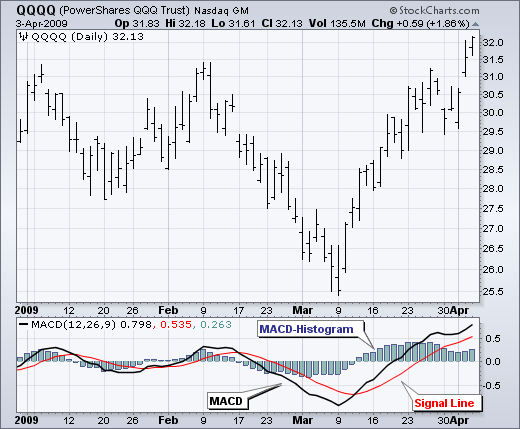
The Moving Average Convergence-Divergence (MACD) indicator is one of the easiest and most efficient momentum indicators you can get. It was developed by Gerald Appel in the late seventies.

Moving Averages Moving Averages are one of the most popular and important technical analysis tools. The ease of use and simple calculation make it a great tool to get information quickly. They also provide the basics for more advanced technical analysis tools like MACD and Bollinger Bands and can be useful for removing some of Read More…

Volatility is founded on the standard deviation, which modifies as volatility expands and declines. The bands spontaneously widen when volatility expands and narrow when volatility declines.
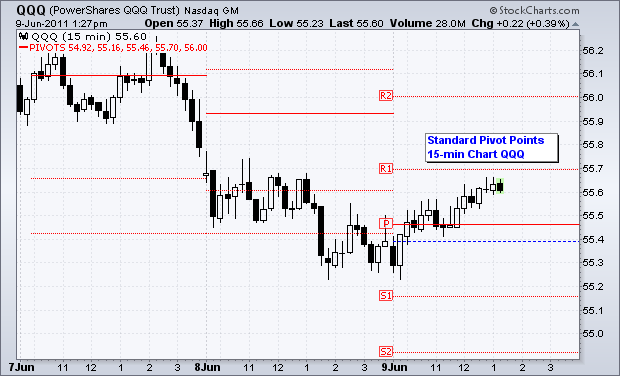
Pivot Points use the previous period’s high, low and close which will define future support and resistance. Pivots Points are important levels chartists utilize to decide directional movement, resistance and support

An action is the type of trade that you would like to place. It includes: Buy Sell Short Cover

A Trailing Stop is an order to close out your position if the price goes against you by a certain percentage or dollar value. It is different to a normal stop order as the stop price moves in your favour if the price of the stock moves in the direction you want it to. This Read More…
A dollar Trailing Stop is a Stop Loss order which is placed as a dollar value. The order will only execute if the price of the security falls by that dollar amount. The trailing stop adjusts automatically as the price of the security rises and bases itself on the new appreciated value. This type of Read More…

A zero coupon bond is a bond sold without interest-paying coupons. Instead of paying periodic interest, the bond is sold at a discount and pays its entire face amount upon maturity, which is usually a one year period or longer. A Treasury Bond is a good example.

Yield To Maturity is the interest rate that will make the present value of a bond’s remaining cash flows (if held to maturity) equal to the price (plus accrued interest, if any). It is basically what you will earn if you buy and hold the bond till maturity. On of the major assumptions is that all the Read More…

Yield is the return investors can expect on a security based on all the outflows and inflows they incur related to that security.

Volume is the quantity of shares/contracts of a security that is traded within a specific time period.
Unsystematic Risk is also called diversifiable risk, residual risk, or company-specific risk. It is the risk that is unique to a company such as a strike, the outcome of unfavorable litigation, or a catastrophe that affects its production. This risk can be mitigated away by diversification.

Treasury bills, often referred to as T-bills, are short-term securities (maturities of less than one year) offered and guaranteed by the federal government. They are issued at a discount and pay their full face value at maturity.
A percentage Trailing Stop is a Stop Loss order which is placed as a percentage value as opposed to an absolute dollar value. The order will only execute if the price of the security falls by a certain percentage. The trailing stop adjusts automatically as the price of the security rises and bases itself on Read More…
Tick refers to a change in price, either up or down.

Strike Price is the price at which an option can be exercised to buy or sell the underlying stock or futures contract.

S&P 500 Index (Standard and Poor’s 500 Index) is a composite of the 500 most actively traded public companies in all ten economic sectors of the U.S. It is maintained by Standard and Poor’s, a division of the Parent company McGraw-Hill.

Selling Short is a trade in which the investor borrows a security and sells it to another investor in the market. To close the short position an investor has to cover (purchase the same security from the market) and return it to the person they borrowed it from.

Security is any financial instrument that represents a financial value
Recession is generally described as a slowdown of economic growth over a sustained period of time.

Quick Ratio is the ratio that measures the ability of a firm to cover its current liabilities with their most liquid current assets. Quick Ratio = (Current Assets – Inventory) / Current Liabilities

A Put Option gives the holder the right to sell the underlying stock or futures contract at a specified strike price.

Pink Sheets refer to the trading of stocks that are not listed on a major exchange or the OTCBB due to a lack of minimum listing requirements or filing financial statements with the SEC (Securities Exchange Commission)
Par Value is the amount that the issuer of a bond agrees to pay at the date of maturity.

Out-Of-The-Money refers to an option that is unfavourable to exercise. An example is a put option with a strike price lower than the underlying stock price, or a call option with a strike price higher than the underlying stock price.
An Options Contract is a contract which specifies how much of the underlying asset can be bought or sold at a specific price. An option contract to buy the underlying is a call option, and to sell the underlying is a put option. Most stock options contracts represent 100 underlying shares.
Market Risk is the general risk for investing in the any security. Every industry in the market is affected by this risk. Examples of market risk: depression, war, inflation etc.
Initial Public Offering, or IPO for short, represents the first opportunity for the public to purchase shares of a company. It is also referred to as a private company “going public”.
In-The-Money refers to an option whose underlying’ asset’s price changes in such a way that it becomes profitable to exercise the option at the given strike price. For example: Stock price is lower than the strike price specified in a put option contract.

Futures Contracts are a standardized, transferable legal agreement to make or take delivery of a specified amount of a certain commodity, currency, or an asset at the end of specified time frame. The price is determined when the agreement is made. Future contracts are always marked to market.

Expiration Date is the last day upon which an option or futures contract can be exercised or traded.