The Federal Reserve Bank, or the “Fed”, is the central banking system of the United States. It serves as the primary regulator of the US dollar, as well as the “lender of last resort” for other banks.
Supply and Demand Examples in the Stock Market The stock market determines prices by constantly-shifting movements in the supply and demand for stocks. Market equilibrium is the price and quantity at which supply equals demand. Stock exchanges play a major role in facilitating this balance. We can use the stock market to give some great Read More…
Could the 1929 Crash Happen Again? Definition The stock market crash of 1929 was a massive crash in stock prices on the New York Stock Exchange, and marks the largest financial crash in the United States. Details The stock market crash came in multiple parts – the initial crash on October 28 (a 12.87% drop) continued Read More…
Comparative Economic Systems – Capitalism, Socialism, and Communism Various economic systems exist with different goals, such as promoting equality or facilitating rapid growth. The structure of an economy within a country is heavily influenced by its political landscape and the values held by its population. However, it is important to note that the economy of Read More…
“Price Controls” are artificial limits that are put on prices. If the limit is put in place to prevent prices from getting too high, they are called Ceilings. If they are in place to prevent the price from getting too low, they are called “Floors”.
The Business Cycle is the broad, over-stretching cycle of expansion and recession in an economy.
The accounting cycle is a series of steps that businesses take to track transactions and consolidate financial information over a specific accounting period (month, quarter, year). The end result of the accounting cycle is the production of accurate financial statements for that period and preparedness for the next accounting period.
Cost Accounting The field of accounting is typically divided into two areas, financial accounting and cost (or managerial) accounting. Whereas the purpose of financial accounting is to report the results and position of a business to external parties, cost accounting focuses on internal reporting for the purpose of improving managerial decision making. This means that Read More…

Build Your First Marketing Plan Marketing is a cornerstone in the success of any organization. However, successful marketing is not as wide spread in large part due to the lack of a marketing strategy and marketing plan. To ensure marketing is successful for an organization, companies need to compose long-term marketing strategies promoting their goals Read More…
Personal selling is when businesses use people to “sell” the product to a customer face-to-face. These sales people promote the product with every aspect of themselves, including their appearance, attitude and special knowledge of the product.
Planning and Evaluating Business Advertising Planning advertising for any business is nothing to be taken lightly. Advertising, after all, is the method by which a business gets its message out to the world. How, and how well, a business advertises its products or services can, and does, make the difference between business success and business Read More…
How to Price Your Products & Services A pricing strategy is the approach a business uses to determine how much to charge for a product or service. Setting the right price is one of the most important decisions a business makes because it affects its ability to attract and retain customers, generate revenue, and earn Read More…
The four stages included in the product life cycle are introduction, growth, maturity, and decline. This cycle is extremely important for managers to monitor in order to plan an effective strategy for their business.
Why You Buy What You Buy Clearly no two products are exactly alike and therefore each merits a unique marketing strategy. However, certain products carry similar characteristics in terms of price level, similarity between competing brands, and the way consumers approach them in the buying process. It is often useful to group these similar products Read More…
Ethics In Marketing Ethics are a code of values and principles that govern the actions of a person regarding what is right versus what is wrong. They determine our behavior when faced with a moral dilemma. Morals are subjective, in that they vary from person to person depending on their point of view, and the Read More…
Creating Financial Statements A company’s financial statements give investors, managers, and other “users” a complete, honest look at its financial health. Finished financial statements follow a standardized format, letting investors compare different companies in the same industry apples-to-apples. Businesses record all financial transactions and use this information to prepare financial statements that summarize the company’s Read More…
How Businesses Find Their Ideal Customers Have you ever wondered how big and small companies build their customer base? With billions of potential customers in the world, how do businesses decide who to market to? Marketing includes all of the activities a business undertakes to identify customers’ problems, needs, and wants, as well as to Read More…
How to Determine an Asset’s Value Every asset has a value that is always changing. So, what factors affect this change? Things such as earnings announcements, financial ratios, and recent news all go into the movement of an asset’s valuation. The key with all asset valuation is that ratios and prices are always relative. This Read More…
Analyzing Consumer Behavior Consumers play an integral part in the marketplace. They are the ones who purchase the products, and largely inform the kinds of products that are produced (demanded). This is where the concept of consumer behavior comes in: what drives customers’ purchasing decisions, and how do they use the products and services that Read More…
Foundations of Marketing Marketing is often used as an umbrella term for a wide variety of business activities, ranging from social media management and advertising to sales and customer service. A business is an organization that produces and distributes goods and/or services to customers, and businesses can range from small local companies to global corporations Read More…
Solvency Understanding financial solvency is as important to an investor as it is to a financial manager. Whether it’s having the money to pay off a friendly wager or having the capital to pay off a commercial loan, being solvent is necessary to achieve long-term success. Solvency is the possession of assets in excess of Read More…
Dividends and Changes of Ownership Why own a stock? Owning a share in a company means that you are an integral part of the puzzle that helps the company tick. Whether Facebook (FB) or Amazon (AMZN), your investment has made you a part of the company. There are many caveats that come with being a Read More…
Making Business Decisions with Accounting Accounting is often defined as the backbone of any corporation or business. Without the numbers explaining the day-to-day operation, it’s tough to tell how well or how poorly said company is doing. In order to simplify accounting as a whole, it is easiest to split it into two separate definitions. Read More…
How Auditors Uncover Deception & Fraud The love of money… A Case of Fraud at LocatePlus Holdings Corporation In business, greed comes most frequently not in the pursuit of profit but in the form of financial fraud. Individuals who lack or loosen their ethical restraints often rationalize their behavior as unavoidable or good-intentioned. But, make Read More…
How to Get Past Resume Software Keywords – the Achilles Heel of every student’s resume. Knowing how to craft a killer resume and cover letter that grabs employers attention (and keeps it) will only help once you get your resume in the hands of a recruiter. Unfortunately, today anyone can apply to just about any Read More…
Are Internships Worth It? The internship season is upon us. It might be better to say that it never ended. Of course. This is a great opportunity to replace a vague estimate with compelling, data-backed statistics that will be much more valuable to your student audience. The new research provides several powerful angles: the high Read More…
Acing Job Interviews What separates a “good” job interview from a “great” one? There are many factors that will work for or against you when you head in for an interview for a great job. Some factors you don’t have much control over, but most job interview “bombs” are very easy to avoid, if you Read More…
Biggest Mistakes of Job Seekers In today’s competitive job market, the average search for a professional role takes between 3 to 6 months—a significant increase from previous years. For new graduates or those changing careers, the search can often last six months or longer. Your search will be much harder if you make one of Read More…
CFA, CFP, CPA & Other Financial Certifications Have you ever thought about a career in the finance industry? Have you wondered what is required to be considered a professional in the stock trading world? Well I have good news: you’ve come to the right place! We’ll cover educational requirements and the basics of Series 6, Series 7, Read More…
How to Visualize Your Portfolio Data Graphing is one of the most important features of spreadsheets. When you need to present your findings, whether as a written report or a presentation, summarizing your data in graphs is the best way to quickly communicate large amounts of data. This guide will walk through taking your raw Read More…
How to Calculate Your Profits The most important reason you would want to use excel to track your stock portfolio is trying to calculate your profit and loss from each trade. To do this, open the spreadsheet with your transaction history. It should look something like this: Tip: If you have not bought and then sold a Read More…
How to Import and Format Data The first step in using any spreadsheet is getting some data! This tutorial will show you different ways to import some of your portfolio data into a spreadsheet and how to format it to make it easier to read. Can’t view on YouTube? Click Here Getting Data The first Read More…
Using Excel To Track Your Stock Portfolio In this article we will be looking at how you can use Excel to keep track of your account’s performance. This is meant as a basic guide for people who have little or no experience with Excel. Using Excel To Track Your Stock Portfolio – Getting Some Data Read More…
Track Your Daily Portfolio Returns If you’ve been trading for a long period of time you might have been curious to know what your daily returns were. Excel and Google Sheets can help you efficiently calculate this in a simple way. Suppose we started trading on August 29th, 2017. It is now September 7th and Read More…
How Companies Finance Their Growth Do you ever wonder how companies have the money to build new stores, develop new products, or perhaps even buy another company? Usually companies do not keep enough cash for these transactions sitting in their bank account – it needs to be raised from outside investors. Corporations have two primary Read More…
A cash budget is used internally by management to estimate cash inflows (receipts) and outflows (disbursements) of cash during a period and the cash balance at the end of a period. In other words, a cash budget is a plan for an organization to obtain and use resources over a specific period of time. This means an organization must have an idea of where their money is coming from and how it should be spent.
Cash flow is a concept in accounting that refers to the spending or receiving of cash by an organization. For a given period, cash flow is calculated by ending cash balance less starting cash balance.
Operating ratios are a class of ratios that are meant to analyze how well a company is using their assets. Specifically, these ratios show how well a company utilizes its assets to create revenue.
How Companies Raise Capital Big corporations are very powerful entities that can possess more capital than some countries in the world. However, every company begins as a small start-up business. These businesses grow with the injections of capital, both from the founders and from other investors. Going Public At one point, a company’s plans become Read More…
Payroll Best Practices Most taxes are paid through payroll withholdings, so a large part of payroll accounting involves accurately calculating, withholding, and remitting payroll taxes. Most people are familiar with their annual personal tax return, but payroll tax filing works a bit differently. Payroll is run weekly, bi-weekly, monthly, or even semi-monthly, so for each Read More…
GAAP – Accounting Gains and Losses Revenue and Gains are related fields related to the income a company receives. The main difference between them is the source of the income. Revenue Revenue represents income earned by the firm through the primary goods and/or services provided. It is the income earned from the firm’s operating activities. For Read More…
When to Record Revenue & Expenses One of the first challenges auditors and regulators faced when developing the Generally Accepted Accounting Principles (GAAP) was trying to standardize how companies account for their revenues and expenses. Before GAAP, companies had (more or less) free reign on how and when revenue and expenses were reported, leading to Read More…
How to Account for Liabilities? Every firm needs capital to purchase assets like inventory, land, and equipment. They also need cash to help manage expenses such as paying employees. How do companies raise the money they need to run their businesses? The answer is through a mix of liabilities (borrowing money) and equity (selling shares Read More…
How Companies Value Their Assets Facets of Assets How much is someone worth? One way to think about it could be to add up assets, or everything a person owns that holds financial value. First, think of everyday items like cash, a car, a computer, and perhaps money stored in a savings or investment account. Read More…
What Is Shareholder Equity? The Basic Accounting Equation says that Assets – Liabilities = Equity Equity (stockholders’ equity, owners’ equity, etc.) is the claim shareholders of a company have on assets once the liabilities have been satisfied. Equity on the Balance Sheet There are five critical entries on a balance sheet related to equity: retained earnings, common Read More…
GAAP – Financial Reporting and Terms What are the objectives of financial statements? How can accountants best meet these objectives? These are the very questions that the Federal Accounting Standards Board (FASB) set out to address in 1976 when they began developing the conceptual framework. FASB’s goal was to identify the objectives and concepts that Read More…
How To Check a Business’s Financial Health Every year or two, most of us go to the doctor’s office to receive a check-up on the state of our physical health. The doctor typically checks several measurements (height, weight, blood pressure, etc.) in order to gauge how our health has progressed over the past year. They Read More…
How To Launch Your Career in Accounting More students than ever are interested in a career in accounting. So, where do you begin? What do you need in order to become a successful accountant? How can you market yourself in the accounting world to stand out among employers? This is a broad overview of what Read More…
Futures Contracts are a standardized, transferable legal agreement to make or take delivery of a specified amount of a certain commodity, currency, or an asset at the end of specified time frame. The price is determined when the agreement is made.
An option gives the owner the right, but not the obligation, to buy or sell the underlying instrument(we assume stocks here) at a specified price(strike price) on or before a specified date(exercise date) in the future. (this is different for European options as they can only be exercised at the end date). Exercising the option is using that right to to buy or sell the underlying instrument.
Spot and Futures contracts are a standardized, transferable legal agreement to make or take delivery of a specified amount of a certain commodity, currency, or an asset at the current date. The price is determined when the agreement is made.
What are Mutual Funds? Pop Quiz
Decoding What Moves The Market Stock and bond prices move up and down every day, sometimes by very large amounts. Before you start investing, the first thing to understand is why these price movements happen, and how to plan for them. Stock Price Movements Stock prices are often represented on a line graph that shows Read More…
5 Ways to Get Investing Ideas The most challenging aspect of starting to invest is picking the first few stocks to add to a portfolio. Every investor has their own techniques and strategies, but we want to give you the tools you need to place your first trades and get your portfolio off to a Read More…
Buying on Margin & Short Selling Explained A margin trading account is a type of investment account offered by brokerages that allow investors to borrow money to buy securities. With a margin account, an investor can borrow funds from the brokerage firm against the value of the securities in their account. This allows the investor Read More…
Brokerages exist to allow individuals to make investments into the larger market. In other words, they connect individuals to the markets as a whole.
Bonds are essentially a much more formal I.O.U (I owe you) used to borrow money. You buy the bond in return to interest over a given period of time. When a corporation or government needs money they issue bonds that people buy. In turn, the issuer (the person who sells the bond) takes the money. However, no one would buy something if they didn’t get something in return, so the issuer will offer to not only pay the person back at a specified date but also provide some interest along the way.
Mutual Funds are a way you can buy into a wide range of stocks, bonds, money markets, or other securities all at once. They are professionally managed, so you are basically buying a piece of a larger portfolio.
ETFs are a fairly new way that you can buy a large group of stocks, assets, or other securities all at once. ETFs trade just like stock; you can buy and sell shares of an ETF throughout the day on an exchange.
The Dow Jones Industrial Average, more frequently known as the Dow or the Dow Jones, is a stock market index made up of 30 of the largest publicly-owned companies based in the United States. It’s a price weighted index meaning that the index’s price is an average of the price of the 30 stocks that make it up.
The New York Stock Exchange (or NYSE) is the largest stock exchange in the world. Think of it as an organized, fast-paced flea market where buyers and sellers from all over the world come to trade U.S. stocks (and now some foreign shares as well). It is where over 2,800 of the biggest U.S. companies have their shares listed.
How to Choose Stocks Strategically The most challenging part of starting to invest is picking the first few stocks to add to your portfolio. Every investor has their own techniques and strategies, but we want to give you the tools you need to place your first trades, and get your portfolio off to a good start. Establish Read More…
What is Diversification & How to Spread Your Risk Understanding what it means to build a diversified portfolio is one of the first concepts a new investor needs to understand. When talking about investing, diversification means to expose yourself to less risk by investing in different asset classes, industries etc. So if something bad happens to Read More…
Why Invest in Stocks vs. Keeping in Savings? Can’t view on YouTube? Click Here Investing in stocks can be a great way to make your money work for you and build long-term wealth, once you have set up your budget and emergency savings fund. In this lesson, we’ll explore why investing in stocks is a Read More…
How to Read a Stock Quote like a Pro Definition A stock quote gives essential information about a particular stock at a point in time. The quote normally includes information such as the name of the company, the ticker symbol, the price, the day’s high and low prices, and the trading volume. Details Usually when Read More…
A “Ticker Symbol” is a unique one to five letter code used by the stock exchanges to identify a company.
Stock is defined as a share of ownership in a company. If you own a company’s stock, you own a percentage of the company itself. This includes partial ownership of its assets (like equipment, vehicles, and buildings) and partial ownership if its income and profits.
What is a Student Loan? A student loan is exactly what it sounds like – a loan given to students to finance their studies. This is most common for college or university students, but also works for trade schools and other vocational studies. Most of the time when a person takes out a loan, they Read More…
Property rights is the foundation of all free-enterprise economic systems. It is what allows people to profit from capital and ideas, without fear of seizure by the government or theft. Definition “Property Rights” usually refers to a set of fundamental rights giving citizens control over their own land, capital, and ideas. Land Property Rights The Read More…
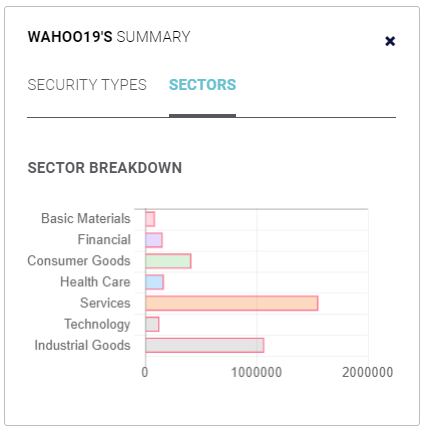
Evaluating how students diversify their portfolios is one of the key concerns of most classes on our platform. Our new Diversification Report just made this a whole lot easier! The new Diversification Report on StockTrak.com gives you a complete look at how students allocate their portfolios – both by security type and by industry. The Read More…

We take student data privacy seriously – with constant innovations to keep student data secure. However, we work with more and more schools that have their own restrictions on what kinds of personal information can be gathered, even for administrative purposes. To help make sure that all schools have access to our platform, we just Read More…

Our latest enhancement finally brings to bear our real-time, true-to-life Forex simulation! Our previous currency trading simulation allowed trading on a pure cash basis – students could buy and sell currencies at the real-time FX rates. While this is still very instructive, it missed out on the full nuance of Forex trading with dynamic charting Read More…

Administrators often ask for our team to reset individual accounts, or even entire classes after a “practice period” at the beginning of the semester. These requests have been getting so popular that we built it right into your admin pages! Starting in Spring 2020, the “Ranking” report in your administration tools will have a new Read More…

Administrators may have already realized there are two separate Rankings pages- the “Live Rankings” (which is visible for students), and the Rank Report (available in your Class Summary Reports). The rank report uses end of day values from the previous trading day, and includes useful tools for managing your class – including buttons to view Read More…

Google Slides and PowerPoint presentations, covering the material from the most popular articles in the Learning Center. Copy or download the presentations, and feel free to add your own material and notes! These templates are available courtesy of PersonalFinanceLab.com

See our customizable library of lesson plans! Most lesson plans include several activity ideas, including activities utilizing the stock game, the included Learning Center, as well as activities from other sources. Pick and choose what works best for your class!
In this lesson students will be learning about the different options that they have after graduating high school. They will be looking at different careers and learning about what skills and level of education is required to be successful in those careers.
In this lesson students will be learning about income tax and why certain states have an income tax. Students will be learning about taxes from the start to finish, from filling out tax forms to calculating what percentage will be taken out of their income.
In this lesson students will learn what sales tax, discounts and tips are. These are important things for students to know and learn because they will be interacting with these terms in their everyday life. Students will walk away being able to calculate all of these terms in a variety of situations.
In this lesson students will be learning about the different costs that come with buying and owning a car. This lesson is important because there are many costs that students do not think come with owning a care and it is important to take them all into consideration before owning a car.
This lesson introduces the concept of opportunity cost in the eyes of both the consumer and the producer. Students will walk away from the lesson thinking about the opportunity cost that comes with each decision that they make.
This lesson plan in an introduction to “Needs” and “Wants”, and how we use that distinction to make decisions throughout the day. The class activities also start to bridge the gap between the basic concepts, up through integrating concepts of money, and the foundations of budgeting.
In this lesson students will learn about the basics of what a credit card is and the different responsibilities that come with owning a credit card. Students will learn about what both a credit report and credit score are and the impact they have on someone’s finances. By the end of the lesson students will Read More…
This lesson plan will introduce students to the concept of comparison shopping. There are a variety of activities that all center around comparing different items in order to get the best value for your money. Students will be able to find the unit prices of various items and also how and where to research different Read More…
This lesson is an introduction to buying a stock. Students will be introduced to basic vocabulary that is involved with a buying and owning a stock. Students will be going through the entire process of buying a stock from looking up the stocks ticker symbol to buying a stock on the market.
In this lesson students will be learning about both budgets and spending plans. They will be able to tell what the different parts of each are and when to use either. They will be looking at other peoples’ budgets and saving plans to evaluate how to create one. They will leave with the tools and Read More…
In this lesson students will be learning all about checking and how to track their purchases. Throughout the different activities students will be interacting with checks and connecting that back to budgeting and spending. Students will go through the entire bill paying process from reading a billing statement to writing a check in order to Read More…
In this lesson students will be learning about different types of scams that could happen over the phone or on the computer. They will be able to identify when they find a scam and will learn the importance of not falling into the scam. Includes 5 customizable activities
It takes time to dive into reports on StockTrak, and ensure students are following up with their portfolios as they should. That is why we created our new Activity Report, available for Fall 2019 classes! The new Activity Report shows an interactive graph if your class trading activity over the last 14 or 30 days, Read More…

The field of accounting is typically divided into two areas, financial accounting and cost (or managerial) accounting. Whereas the purpose of financial accounting is to report the results and position of a business to external parties, cost accounting focuses on internal reporting for the purpose of improving managerial decision making. This means that cost accounting Read More…

A company’s financial statements give investors, managers, and other “users” a complete, honest look at its financial health. Finished financial statements follow a standardized format, letting investors compare different companies in the same industry apples-to-apples. For the company’s financial reporting team, this presents a challenge – every business’s internal operations are different, but all activities Read More…

Instructors who use a lot of assignments have noticed the list is getting long – we now have over 300 activities available. This is great for flexibility, but can be frustrating when setting up assignments each week, avoiding duplicates. With this in mind, we launched our new “Flag Duplicate Tasks”. This new feature will look Read More…

The next time you are setting up Assignments for your class, you might notice a new item at the very bottom of the list – “Assessment”. An “Assessment” is a new type of quiz, added because we received many requests from teachers to have more “Comprehensive” assessment tools for their classes. If you add an Read More…
Many of the most effective class projects using the portfolio simulation have students work in teams. This presents some challenges with the portfolio simulation – striking a balance between cooperation and ensuring accountability for each students. With our most recent update, you get the best of both worlds! The new StockTrak Team Functionality will let Read More…
If you are seeing this message, welcome to the Admin Dashboard! The admin dashboard is composed of 6 independent pieces: Announcements Box – this will show the current announcement you have posted for your class. If you post an announcement, it will appear on the right side of every page for all your students, Read More…
Class Forums are the newest feature added to the trading platform – this will allow your students to post messages, and reply to their classmates, all in one place. Forum posts are short messages, around 500 characters each (a bit more than a Trade Note). We also show the latest forum posts on the right Read More…

One of the most common requests we get from instructors is if students can see each other’s trades. Well, now they can! One of the most common requests we get from teachers is if students can see each other’s trades. Well, now they can! We added a new contest rule, called “Public Portfolios”. If Read More…
One of the most-requested new features in Spring 2018 was cryptocurrency trading, both from students and teachers. You asked and we listened – crypto trading is now available! Cryptocurrencies currently share some of the rules from Stocks, such as the commissions and position limits. However, you can trade cryptos both using a quantity (such as Read More…

With the latest upgrade to the trading platform, students can now take short notes with every trade! We call this “Trade Notes” – a short, 1-3 sentence explaining the rationale of every order, connecting their trades with what is learned in class. As the instructor, you can also require trade notes for your class. When Read More…