What Is the Product Life Cycle?
Humans and animals have standard life cycles—a series of stages of living that each passes through before death. For people, these phases could include infancy, childhood, adolescence, adulthood, and retirement.
Before a product ever reaches the market, it goes through a product development process. Product development is the process of creating or improving a product through research and iteration, and typically includes six stages: ideation, validation, design, messaging, production, and launch. The product life cycle begins after these stages are complete, with the introduction stage following the product’s launch. As customer demand changes over time, products move through the four stages of the product life cycle: introduction, growth, maturity, and decline.
Product Development
Before a product reaches the market, it goes through a product development process. Product development is the process of creating or improving a product through research and iteration, and typically includes ideation, validation, design, messaging, production, and launch.
During ideation, businesses generate ideas through market research, research and development (R&D), and brainstorming. Validation involves testing ideas with potential customers to determine whether the product is feasible, viable, and capable of achieving product-market fit. Businesses often create a minimum viable product (MVP)—the simplest version of a product, such as a sketch, description, or prototype—to gather early customer feedback before committing to full production.
The design stage focuses on developing prototypes, selecting materials, estimating costs, and refining product features based on customer feedback. During messaging, businesses create a value proposition that explains who the product serves, the problem it solves, and why it is better than competing alternatives. The production stage involves manufacturing the product and establishing supply chains while matching production levels to expected demand. Finally, the launch stage begins when the business starts taking orders, distributing the product, and marketing it to its target customers. At this point, the product enters the introduction stage of the product life cycle.
Introduction Stage

The introduction stage marks the very first time a company brings a product to market. During this stage, sales volume and revenue are typically low, and marketing efforts focus on building brand awareness and generating initial customer demand. The main objective for companies at the beginning is not profit (new products often generate losses because of high advertising costs and low sales), but rather developing a market for the product and building awareness among consumers. If successful, the company can then enjoy a better ROI in future stages as sales grow and relative costs lessen.
Before a product reaches the market, businesses typically begin by observing, interviewing, or surveying potential customers to identify and validate a problem, need, or want that affects multiple people. Once the problem has been validated, teams develop potential solutions through brainstorming, sketching, and prototyping. They then gather feedback on a minimum viable product (MVP)—the simplest version of the idea with only its core features—before committing to full-scale production and launch.
An example of a product in the introduction stage is the fully autonomous robotaxi services from companies like Waymo (owned by Google) and Cruise (owned by GM), which are currently available in only a handful of cities as they work to build public trust and expand operations.
One of the key attributes of this phase is a necessity to establish quality. When a company releases a new product, step one for management is to make sure that those first units are perfectly made and a strong representation of what they want to showcase to their customers. If the introduction of a product has issues with quality, it becomes very difficult to convince the customers to give the product a second try. The Echo device brought in numerous unique, consumer-friendly features like the ability to remotely control the lights in their home, use Amazon’s Alexa to ask questions or issue commands (ie to order pizza), and additionally operate as a speaker for music. Successfully appealing to customers led to a successful introductory stage for the Echo.
In the introduction stage, there are two main pricing strategies. Either managers can keep prices low in an attempt to appeal to customers and build market share or they can set higher prices to try and recover more of their development costs in the short run. Promotion in the introduction stage can often be aimed toward innovators—the bold types who are the first to try a new product and show it off to their peers. Sometimes promotion also includes educating consumers about a product, particularly if it is something they have never seen before. At launch, businesses begin taking customer orders, distributing the product through appropriate sales channels, and marketing it to their target segment.
Growth Stage
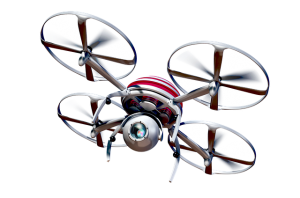
If products make it through the introduction stage, they next advance to the growth period. During this stage, sales volume and revenue begin increasing rapidly, production expands to meet growing demand, and competitors often enter the market. Marketing efforts shift toward differentiating the product from competitors through branding, advertising, quality improvements, and innovation as companies promote to a wider audience in an attempt to build consumer preference and win market share. Because of increasing demand, companies are often able to start making sizable profits during this stage.
An example of a growth-stage product in today’s market could be drones; though they are a fairly new product, the market has been established and demand is rapidly growing.
In the growth stage, promotion picks up aggressively. Whereas beforehand the company advertised more selectively, now they will target a broad audience to maximize exposure. In the drone example, look at just a couple years ago; it would have been extremely rare to see drones flying around or to even know someone who owned one. Now that the market has been established a bit more, most people at least know someone who owns a drone and they are far more commonplace because of the increased promotion drones have had.
To keep up with the increased demand, distribution channels are added. Some products must also use legally required distribution channels, such as prescription medications or products that pose health or safety risks. With production at higher levels, economies of scale begin to lower costs per unit and improve margins. Combined with better pricing ability and higher sales volume, this means companies often earn higher profits or at least lower losses during this phase.
The growth stage is usually a favorable one for the company producing a product, and one that managers try to extend as long as possible. A high-quality product, strong advertising strategy, and connection with consumers help make the growth phase continue for a longer period of time. It also helps to have a product that is difficult for competitors to imitate, as competition can shorten the growth period. Patent or copyright protection can help fend off rival firms.
Maturity Stage

At some point, growth inevitably slows down and products reach the maturity stage. During this stage, sales volume and revenue typically flatten as the market becomes saturated. Businesses focus on retaining market share by building customer loyalty while continuing to differentiate their products, lower prices when necessary, and introduce new features to remain competitive. The top focus for managers is protecting the market share they have earned, because the maturity stage is often the phase of the product life cycle with the most competition. Another key objective is to maximize profits—products in this phase often become “cash cows” that generate the funds necessary for developing new products. Apple’s iPhones are an example of a maturity stage product, as just about everyone who wants an iPhone likely has one by now and growth has slowed down.
A major issue for companies in this stage is the intensification of competition. Now that a proven market exists for the product, competitors see that there is profit involved and enter seeking a piece of the pie for themselves. Some of these competitors may try to closely imitate the product and sell for a cheaper price, while others try to improve certain aspects of the product. Either way, it is vital for companies in this stage to repeatedly convince consumers that their product is better than the output of competitors and to retain customer loyalty. For the iPhone, Apple faces stiff competition from top rival Samsung as well as other firms. Apple’s focus is to keep innovating and adding features to the iPhone that will keep their customers coming back.
Because of the intense competition, often prices have to be decreased in the maturity stage or else customers will leave and turn to a cheaper variety of the product. Promotion is focused on informing consumers why the company’s product is better than that of competitors. The maturity stage can continue for a long time if a product is appealing enough to have durable, long-lasting demand from consumers.
Decline Stage

In the final stage of a product’s life, sales volume and revenue begin to fall as consumers switch to competing products or newer substitutes. Businesses may reduce costs, redesign the product in an attempt to revive demand, or discontinue the product entirely if it is no longer profitable. Traditional telephones are an example of a product in this stage. With the emergence of cell phones, fewer and fewer people use landlines, and the market has largely declined.
Companies have several options with products in this stage. The first option is simply to close up shop and move on to new products. This makes sense when the product is no longer generating a profit or when the resources required to continue production no longer justify the level of profit being obtained. This “liquidation” option either means selling the product segment off to another firm or simply getting rid of all remaining inventory and ceasing production.
Alternatively, firms have two main choices that involve continued production of a product in decline. The first is increasing investment to add new features or new applications to a product and rejuvenate growth. This can be risky, as it wastes capital if the turnaround effort fails. The second choice is to continue to offer a product but decrease investment in it. This usually leads to the product falling behind remaining competition, but can be a great idea if the reduced costs lead to profits that can be reinvested in other areas of the company.
Validity of Product Life Cycle Model

While the product life cycle model is useful in many ways, it does have some issues. For one, there are products that do not seem to fit into the model. Brands like Coke (KO), Heinz ([KHC), and McDonald’s (MCD) have been around for decades without running into decline, a phenomenon not predicted by the product life cycle. This would suggest that outstanding, well-managed brands have the potential to last indefinitely.
Niche brands that occupy non-traditional portions of the market are also less applicable to the prodct life cycle. Swedish furniture company IKEA is an example of this—by combining low-cost, simple products with modern, high-quality in-store atmospheres and offerings, IKEA feels a lesser impact from competition despite their lack of adaptation over time. The unorthodox approach and presentation to the consumer protects IKEA and has led to outsize growth over the past few years.
An additional issue is that sometimes the expectation of a “product life cycle” can lead managers into poor business decisions. For example, the product life cycle suggests that for products in the maturity stage, differentiation and adding features is a necessity to help protect market share. However, in reality, sometimes it is more effective to keep a product simple and avoid costly extra expenditures on refining the product. Throughout the product life cycle, businesses continually adapt their marketing strategies in response to changing customer demand and competitive pressures in order to maximize long-term success. In summary, the product life cycle has some issues, but it can still be a useful tool for managers to help them develop their marketing strategy.