Land Property Rights The concept where a person can own a piece of land and have exclusive use of it. Some countries do not allow perpetual land ownership – the land is owned by the government, and only leased to individuals for some (usually very long) period of time.

Labor Union An organization of employees in a company that collectively make agreements with their employer in regard to pay and working conditions, instead individual agreements with each employer.

Labor Productivity An economic indicator that measures how much output is produced in an economy from one hour of labor. Higher labor productivity means that workers are more efficiently using technology to produce output.

KISS “Keep It Simple, Stupid” – a concept where it is much easier to use a simplified system that is easily understood than an overly complex system that has too many objectives at once.

Journal Entries The method by which transactions are recorded by a company’s accounting team. Journal entries are made in the double-entry bookkeeping system, where every transaction is recorded on two sides of a ledger showing from where it came and where it went, allowing easy error detection and correction.

Joint Stock Corporations An organization which has shares of stock available for sale to investors. Once the shares are issued and sold, investors can sell their shares to other investors.

Job Creation The impact of public policy that incentivizes businesses to hire more employees.

Issuer An organization that sells bonds to investors and must make payments towards those bonds until they are fully repaid. Click Here for our lesson on Bonds

Traditional IRA A traditional individual retirement account (IRA) is a retirement account you open yourself, separate from a job. Eligible contributions can lower your taxable income now, and you pay income tax when you withdraw the money in retirement. Since the withdraws are usually after the person has retired, the income at that time is Read More…

Investor A person or organization that uses their available resources to fund the expansion of other businesses in exchange for a share of the future assets and profits.

Investment Banks A type of bank that engages in funding the expansion of small, growing companies in exchange for shares of stock in those businesses. Investment banking is considered risky – as many of the businesses will fail, but with huge rewards when some of the invested businesses start to seriously grow.

Investing Activities The act of buying, selling, and redistributing a range of investments across several companies.

Investing The act of providing a business with cash or other capital in exchange for a share of ownership in that business.

Inverse ETF A type of exchange traded fund that seeks to move in the exact opposite direction of some other benchmark. For example, an inverse gold ETF would seek to increase its price as the price of gold falls.

Inventory The goods that a company has in stock and available for sale to potential customers.

Intrinsic Incentives Incentives that come from the act of doing some specific activity, rather than a consequence of that activity. For example, going hiking and to enjoy the outdoors would have an intrinsic incentive – a person wants to engage in this activity just for the sake of doing it.

Internship A type of short-term employment that focuses equally on providing the intern (employee) with valuable experience and education as much as for the company to derive benefits from the intern’s labor. Internships may be paid or unpaid.
Internal Revenue Service (IRS) The federal bureaucracy in the United States that is responsible for collecting income taxes.

Internal Rate of Return A measure of business profitability that discounts a company’s cash flows over time (either going back into the past or estimates going forward into the future) to determine what the return on investment has been over that time.

Internal Controls A concept in risk management where a company’s internal management team and systems it has in place safeguards to ensure financial reporting is accurate, fraud is not taking place, and the company is complying with all relevant laws and regulations.

Interest Coverage A financial ratio that measures how easily a company can make payments on its existing debt. It is defined as “Earnings before interest, taxes, and depreciation” / “Interest Expense”.
Interest A type of financing charge that is paid to the lender as a percentage of the total amount borrowed. This can be a charge paid to a credit card company or an amount you earn on a savings account. Related Lessons

Intent (Contract) A key component of a contract that stipulates that both parties must have been fully aware and purposefully entered into the contract in order for it to be valid. For example, if an agreement was clearly made as a joke, intent was not established and so the contract is not valid. Click Here Read More…

Intellectual Property Rights The concept where an idea or invention can be owned by a single person, and anyone who seeks to replicate that invention must get permission from the original owner (or whoever the original owner sold their rights to). This includes copyrights and patents.

Intangible Wealth A type of wealth that cannot be easily converted into money. An example of intangible wealth may be a university degree, a loving family, or specialized skills that have some value, but cannot be sold.
Insurer A company that issues an insurance policy.

Insured A person or company that is protected with an insurance policy.

Insurance Claim An action where a person or company notifies their insurance company that some damage or cost has taken place that their insurance policy should cover. This is the first step in getting an insurance company involved in an event, usually with an expectation the insurance company will make a full or partial payment Read More…

Insurance A financial product a person can purchase to protect against some type of risk. The most common types of insurance are health (protecting against medical expenses), auto (protecting against incidents involving vehicles), homeowner/renter (protecting against incidents at home), and life (providing a payout in case of death to help support surviving family members). Related Read More…

Insolvent A status where a person or company does not have enough liquid assets (like cash) to pay their immediate bills due.

Insider Transactions A transaction of stock or stock options by someone in a company who has knowledge that is not available to the general public (insider information). While this is not illegal, insider transactions carry special notification and reporting requirements.

In-Network A term in health insurance to refer to health care providers (doctors, clinics, hospitals, or pharmacies) that the insurance provider has already established contracts for pricing and payment terms. A provider who is “in network” is greatly preferred by health insurance providers, and the insurance provider usually provides much better benefits (and easier access) Read More…

Initial Public Offering The first time a company’s shares of stock are made available for purchase to the general public.

Inflation Inflation is a general rise in prices over time, so the same money buys less than it used to. The inflation rate measures how much prices, on average, rose from one year to the next. If the rate is 3%, a basket of goods that cost $100 last year costs about $103 this year. Read More…

Industry A group of companies that share similar characteristics and are often competitors. Companies within the same industry can be compared apples-to-apples by their financial statements.

Industrial Revolution A turning point in history when the economic output transitioned from being based mostly on human- and animal-power to coal, steam, and oil-powered. This was characterized by mechanization of farming and the establishment of factories, and a huge increase in total economic output.

Individual Health Insurance Health insurance purchased by an individual or single family. Individual health insurance is priced more in line with the actual age and lifestyle of the person being insured. Individual health insurance is usually much more expensive than group health insurance. Click Here for our lesson on Health Insurance

Indirect Costs Indirect costs are expenses of running a business that cannot be assigned to a single product or service. They often include office rent, manager salaries, marketing, utilities, and insurance. Most are fixed, though some may change over time. Companies spread these costs across products using a cost driver, such as machine hours or Read More…

Index Fund A type of mutual fund that seeks to replicate the movements of a specific stock index. Index Funds tracking the S&P 500 are popular ways to invest in a diversified array of stocks with a single trade.

Index ETF A type of exchange traded fund that seeks to replicate the movements of a specific stock index. Index ETFs tracking the S&P 500 are popular ways to invest in a diversified array of stocks with a single trade.
Income Tax A tax a government imposes on the income of a person or business to fund governmental activities. Related Lessons
Income Statement An income statement is a financial report that shows how much a business made or lost over a period of time, usually a quarter or a year. It lists the revenues earned and the expenses incurred during that period, including taxes. The result is a profit, called net income, or a loss, called Read More…

Income Reports A report that shows the total income and total expenses from a person or business over a period of time, with a clear indication of the profit or loss over that time period. Related Lessons
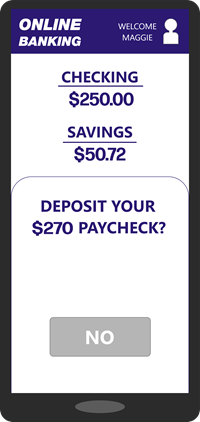
Income The cash or other assets that are acquired by a person through work, or by a company through sale of their goods and services.

Import A good or service that a person or company from one country buys from another country.

Implied Volatility In options trading, this is the part of the movement in an option’s price based on how much investors think the underlying stock’s price will change over the life of the option. Related Lessons

Implied Rights Rights that a person has but are not specifically outlined in a contract or other document. The “Right to complain” is perhaps the most frequently used implied right – a company cannot stop you from complaining about their product or service (so long as your claims are true).

Identity Theft Identity theft is someone using your personal information as if they were you, in order to commit fraud. The information can include your name, date of birth, a Social Security number or Social Insurance Number, or account numbers. A common result is a credit card, a loan, a tax return, or a government Read More…

Hyperinflation A type of runaway inflation where prices rise very rapidly, making savings useless. Countries experiencing hyperinflation typically have individual consumers resort to black markets dealing in some other currency or bartering.

Horizontal Management A type of management structure that has few layers of management and typically larger team sizes. Individual employees typically have a lot of freedom in how they carry out their work, with limited oversight from managers. This management structure works best in fields where most employees are experts or have vary widely in Read More…

Homeowner’s Insurance Homeowners insurance protects against damage to your home and against harm the home causes to other people. It covers the building and your belongings, including losses from burglary, fire, or many storms, and it can pay medical bills if someone is injured there. Flood and earthquake damage are usually excluded and need their Read More…

Homeowner’s Association A legal entity formed by the owners of condominiums in the same building, or houses in a subdivision. This entity is usually classified as a non-profit, and is charged with maintenance of common buildings, streets, sidewalks, and other areas.

High Pressure Selling The act of a salesperson to increase the stress level during a sales process, usually through limited time offers or heavily insisting that some harm will come to the person being sold to. This sales tactic is often used to convince the customer to buy something just to get out of the Read More…

High The maximum price a stock reaches during a given time period, usually the day or year.

Hedge The act of insuring against a risk.
Healthcare Durable Power of Attorney A binding document that grants someone else the ability to make critical, life-or-death decisions about your health care in the event that you are not able to yourself (for example, if you are in a coma).
Health Insurance A type of insurance that covers medical expenses for the insured person. Most health insurance still requires the insured person to pay some costs before the insurance kicks in, with some exceptions for preventative care. Click Here for our lesson on Health Insurance

Hazards Elements of a place, lifestyle, or business that can cause accidents or other damage. Hazards are recognized by insurance providers as a reason why an insurance policy may be risky.
Hardship Assistance Program An organized program provided by creditors to provide leniency for their clients experiencing temporary hardship. While these programs are not usually advertised, they are organized to allow clients to recover after a period of hardship then continue to make payments, rather than force the customer into bankruptcy. Click Here for our lesson Read More…

Hardship A term in finance to refer to an unexpected strain a person is experiencing that may temporarily make them unable to pay back their debts. An important part of a “hardship” is that it should be temporary, and so creditors may waive fees or grant leniency to original loan terms until the hardship has Read More…

Growth Hacking A field of marketing focused on rapidly growing the customer base of a small company. This often relies on networking effects from current customers to reach their contacts, attempts at the creation of viral content to rapidly expand brand awareness, and other low-cost, high-impact brand awareness strategies.

Growth At a Reasonable Price (GARP) An investing strategy that mixes concepts of Growth Investing (looking for companies with high potential to increase their price) and Value Investing (companies that likely are under-valued). GARP investors usually do not look at the most expensive blue-chip companies but show consistent earnings.
Group Health Insurance A type of health insurance that is purchased for a large group of people, usually a company purchasing a health plan that applies to all of their employees. Because Group Health Insurance brings together many different types of people into one plan, it is almost always significantly cheaper than purchasing individual health Read More…

Gross Profit This is the Total Revenue of a business, minus the total Cost of Goods Sold over the course of a specific time period (usually a quarter or year). This does not include taxes or other fixed costs.

Gross Output The total value of all outputted goods and services in an economy in a given year. This is different from Gross Domestic Product because Gross Output includes unfinished products as well. For example, a mine producing iron ore would be included in Gross Output, but not Gross Domestic Product because iron ore is Read More…
Gross Margin This is the simple profit margin a company has on its sales, defined as “(Revenue – Cost of Goods Sold) / Revenue”. The gross margin can be a good indicator on how much profit a business is earning on the average transaction, but it does not include taxes or other expenses and so Read More…

Gross Income The total income a company took in over a given period of time, usually a quarter or year. Gross Income does not take out any expenses or taxes.

Gross Domestic Product Deflator A measure of inflation that compares the prices of goods and services traded in one year compared to the year before, weighted by how many of those goods and services were exchanged. Many economists prefer to use the GDP Deflator to measure inflation instead of the Consumer Price Index.

Gross Domestic Product (GDP) A measure of all finished goods and services have been exchanged in an economy over the period of one quarter or one year. This is the most frequently used measure of economic activity to determine if the economy is expanding or shrinking.

Grace Period For credit cards and similar unsecured credit, the grace period is the time between the end of a billing cycle and the date the full amount borrowed must be paid before financing charges are applied. If you pay the full statement balance by that date, new purchases are not charged interest. A minimum Read More…

Government Bond A type of debt that is issued by a government to finance large expenses that must be paid back over time. Government bonds are sold to investors, who receive the regular interest payments until the bond is paid off at its expiration date. Click Here for our lesson on Bonds
Government A public institution with the power of taxation. Governments can be national, state, local, or even sub-local (like a school board).
Good Till Day A type of order term placed to purchase stock or other securities at a brokerage, with instructions that if it does not execute by the end of the current (if the markets are open) or next (if the markets are closed) trading day, it should be cancelled. All market orders are Good Read More…
Good Till Date A type of order term placed to purchase stock or other securities at a brokerage, with instructions that if it does not execute by a certain date, the order should be cancelled at the end of that date. Good Till Date, or GTD, orders cannot be used on Market Orders.
Good Till Cancelled A type of order term placed to purchase stock or other securities at a brokerage, with instructions that it should remain open until it executes, or the investor manually cancels the order. Good Till Cancelled, or GTC, orders cannot be used on Market Orders.

Good Debt Debt that was taken out to fuel growth or appreciation. For example, a mortgage to buy a house is typically considered “good debt”, since it allows the purchaser to stop paying rent and build value in their home. Related Lessons

Gold Standard A type of monetary standard where every unit of paper money is directly redeemable for a specific amount of gold that is held in the issuing country’s National Bank. A country adopting the Gold Standard cannot issue any money if they do not have more gold held in reserves to back it up.
Gold A precious metal with the atomic symbol Au. Gold has been prized since ancient times for jewelry because it does not rust or corrode and is easily forged with basic tools. It is also useful in the manufacturing of electronics. Because of its useful value, gold is frequently purchased as an investment under the Read More…

Going Concern An accounting concept where a business is assumed to be continuing to operate for the foreseeable future. If a business is not assumed to have a “going concern” (for example, if they intend to dissolve on a specific date), different accounting method are required.

Gift Cards A medium of exchange that converts cash into a certificate that can only be redeemed at specific stores or outlets. A gift card usually has the same value as cash at those businesses that accept it, but no value outside those businesses.
Geographic Segmentation A marketing concept where different types of marketing campaigns or promotions are presented to different geographic areas (for example, countries, states, or cities). Related Lesson:
Gambling An act where a person makes a wager on a game of chance, without having a direct impact on the outcome of the wager. Investing is different from gambling because an investor purchases a part of a company, and so gets a vote in that company’s corporate structure. A gambler would have no direct Read More…

Gains The increase in value of an asset since the time it was purchased. In GAAP accounting, all assets are logged at the price they were purchased (minus depreciation). Only when the asset is sold can the company record a “gain” due to increased value.
GAAP Generally Accepted Accounting Practices, GAAP is the industry standard for how companies need to prepare their financial statements. Adherence to GAAP standards ensures that an outsider can compare the financial statements from different companies apples-to-apples.

Futures A type of contract for a commodity or other asset to be delivered at some specified date in the future. Futures contracts are frequently used so producers know the exact price of what their inputs will be when they need them, to “lock in” favorable pricing.
Future Value The cash value of an asset at some future date, usually calculated by using interest rates to project growth. See our full lesson on Future Value by clicking here.

Fundamental Analysis A type of investment research that focuses on analyzing a business’s financial statements and operations to determine if it is worth buying. This is sometimes considered “researching what to buy”, as opposed to trying to time when exactly to buy or sell.

Fund Expenses The percentage of a fund’s total value that is spent on managing the fund itself over the course of a year.

Full-Service Brokerage A type of stock broker that offers advisory services and personalized financial planning in addition to just the ability to buy and sell investments. Click Here for our lesson on What is a Brokerage?
Front Load A type of mutual fund when the advisor’s fees for managing the fund is paid when an investor first buys their shares.
Fringe Benefit A type of employment benefit that may not be expressed in dollars. This may be things like on-site childcare, extra vacation time, paid lunches, and other perks. Related Lessons

Frictional Unemployment A type of unemployment caused by a transition of a single person between jobs – after they leave one job and while they are searching for the next. Click Here for our lesson on Unemployment
Free Trade Agreement An agreement between two or more countries to remove trade barriers like tariffs to facilitate trade between the countries.

Free Application for Federal Student Aid A free form that applies a student to a variety of federal financial assistance programs to subsidize the cost of education.

Fraud Purposeful misleading of another person or individual to secure one’s own financial gain.

Franchise A type of business that offers a “template” to individual business owners. The “Franchisee” wholly owns and operates their own establishment but must operate within the rules of the “Franchisor” in order to receive marketing, logistical, training, and other support services (and the right to use the brand’s name). Most McDonald’s restaurants operate on Read More…

FOREX The foreign exchange markets, where individual investors and financial institutions buy and sell currencies.

Forensic Accounting A type of accounting practice that is concerned with tracing individual transactions through various accounts, usually to identify fraud.
Foreign Exchange An exchange of currencies that trade in a financial market. Foreign Exchange, or FX, markets determine the exchange rate of one currency to another based on global supply and demand.
Foreign Corrupt Practices Act An ethics law in the United States that formally prohibits US citizens or corporations from issuing bribes to foreign governments. This was already illegal to bribe officials in the United States, but this law made it legal to bribe anyone, anywhere.