Career Readiness & Workplace Relationships
Before you decide where you are going, you must know who you are.
Most people assume career planning starts with searching job titles and educational requirements. In reality, it starts with an honest assessment of your values, interests, strengths, and goals. When you align your choices with your identity, you commit to your plans, perform better on the job, and recover faster from setbacks. If you ignore your core beliefs, you risk spending years on a path that never feels right.
Career readiness means knowing yourself well enough to communicate your goals clearly to others. This self-awareness allows you to build professional relationships that support your growth. This lesson explains how looking inward helps you develop the interpersonal and behavioral skills that employers value most.

Self-Awareness and Personal Characteristics
Before you compare occupations or training programs, you need an honest read on yourself. Self-awareness means evaluating your values, interests, strengths, and goals over time. The clearer you are about who you are today, the easier it is to decide who you want to become. This evaluation is not a one-time worksheet exercise. It is a professional skill you will use in every workplace you enter.
Your personality shapes how you work with others and which environments feel natural. Psychologists often describe personality using the Big Five traits. Each trait is a spectrum, and most people land somewhere between the two extremes. These traits do not tell you which job to pick. Instead, they help you predict where you will feel energized, drained, or stretched—and what kind of support you need to perform well.
Conscientiousness
Conscientious individuals work with organization, dependability, and focus. Psychologists link high conscientiousness to deliberate career planning and confident decision-making. If you fit this description, you likely keep daily to-do lists, arrive early for shifts, and keep group projects on schedule. Structured, achievement-oriented paths—like licensed trades, healthcare specialties, or operational logistics—often suit this structured mindset.
If you score lower on conscientiousness, you will not automatically fail. You may simply thrive under external deadlines, short and varied tasks, or shared team accountability. Recognizing your need for external structure is a sign of maturity, not a lack of ability.
Extraversion and Introversion
Extraversion measures how social interactions charge your mental battery. Extraverts gain energy from collaborating, networking, and public-facing roles. You see this trait in the retail lead managing a chaotic Saturday rush or the camp counselor directing a cabin group.
Introverts recharge through quiet, solitary time. They prefer depth over constant stimulation. This preference is not shyness. An introvert might excel at drafting talking points before a presentation, coding solo, or building deep trust through one-on-one client relationships. Skilled trades, technical troubleshooting, and editorial roles often fit introverts well. The main risk for introverts is choosing jobs that demand continuous social performance without giving them space to recover.
Most people sit in the middle of this spectrum. Notice your own patterns after a full day of work or school, not just a single hour.
Agreeableness
Agreeable people excel in collaborative, service-oriented roles like nursing, teaching assistance, or client care. If you rank high here, your teammates will view you as a natural peacemaker who smooths over workplace tension.
However, highly agreeable people often struggle to set firm boundaries. You might find it hard to say no when a manager demands extra shifts, or when a coworker fails to pull their weight. Career readiness means learning when to cooperate and when to establish clear boundaries.
Openness to Experience
Curiosity, adaptability, and creativity define people high in openness. They tolerate ambiguity and enjoy exploring new methods. This trait fits fast-changing fields like technology startups, design, media, and entrepreneurship.
Lower openness is equally valuable. Many stable careers reward consistency and predictability. Roles in payroll, quality assurance, and highly regulated medical environments require strict adherence to protocol. If you prefer knowing exactly how your workday will unfold, choose environments where change is slow and documented.
Neuroticism (Emotional Reactivity)
Neuroticism measures your emotional reactivity to stress. High emotional reactivity means you experience worry and self-doubt more intensely. This sensitivity can cause career anxiety, but it can also guide you toward secure decisions. It might lead you to choose stable industries with high hiring demand, build a robust emergency fund, or avoid volatile, commission-based roles. Recognizing this trait helps you build early support systems, like professional mentors and realistic planning timelines.
No personality profile is “good” or “bad.” The goal is to understand your tendencies so you can choose work you can sustain, negotiate for conditions that help you perform, and spot where you need extra help.
Your everyday life already trains these professional skills. A development study called the M.O.M. (Mothers Overcome More) Report revealed how managing a household and caring for family members builds rapid multitasking, adaptability, and resourcefulness. When you coordinate your siblings’ school schedules or balance a part-time job with high school exams, you build the exact muscles employers list on job boards. Career readiness begins when you name these experiences and translate them into professional assets.
Personal Profile and Employability Skills
When employers ask about skills, most applicants immediately list technical tools and certifications. While these assets matter, they represent only a fraction of your value. Your skills also grow through volunteer work, team sports, creative hobbies, and unpaid family responsibilities.
You can sort your abilities into a few distinct buckets when you build a personal profile—the short summary at the top of your resume that introduces you to an employer. Auditing your experiences into these groups makes it easier to write that summary and to answer interview questions without freezing.
Knowledge-Based skills
Knowledge-based skills, often called hard skills, are the specific technical capabilities you learn through formal training, classes, or direct experience. Examples include coding in Python, operating accounting software, or using GIS mapping tools. A welding certificate, a first-aid qualification, or fluency in a second language also belong in this category. While these hard skills get you through the hiring door, research suggests they represent only 25% of what you actually use to succeed on the job.
Transferable skills
The other 75% of your professional value consists of transferable skills. These are versatile abilities that travel with you across different roles, industries, and life situations. You develop them through everyday activities like school group projects, sports, and hobbies. Transferable skills fall into four categories:
People Skills
People skills govern how you collaborate with others. You use these skills when you negotiate a fair shift swap, train a new hire on a cash register, or de-escalate an angry customer. A camp counselor resolving a cabin dispute and a nurse onboarding a new intern are both developing people skills, even if neither holds a formal management title.
Mind Skills
Mind skills dictate how you analyze and organize information. You use them when you break a massive project into weekly milestones, spot a math error in a budget, or compare suppliers to find the best value. Whenever you adjust a study plan or diagnose a recurring problem, you practice mind skills.
Applied Skills
Applied skills turn ideas into concrete results. Examples include drafting a concise email to a manager, building a clean presentation deck, or documenting a repair process so the next shift can replicate it. These skills prove to employers that you can deliver usable work.
Adaptability Skills
Adaptability skills determine how you react when plans fall apart. You practice adaptability when you cover an unexpected double shift, adjust to a coworker quitting mid-project, or maintain a calm, helpful tone during a busy dinner rush. Employers notice instantly when a worker shuts down, complains, or blames others the moment conditions change.

Personality traits
Personality traits—like integrity, dependability, and resilience—shape how you apply your skills. They are not empty buzzwords. Arriving on time without reminders, owning your mistakes, and continuing to apply for roles after a rejection are actions that signal a strong work ethic. When these traits are missing, managers often complain that a hire had the technical skill but lacked the maturity to hold the job.
Some of your strongest skills stay hidden because the experiences that built them do not sound corporate. A high-volume coffee-shop shift trains customer service, inventory control, and rapid problem-solving. You likely have more to offer than you list on your resume.
To evaluate your readiness against what hiring managers actually prioritize, look at recurring employer surveys. The National Association of Colleges and Employers (NACE) regularly asks employers which behavioral gaps show up most often in new hires. Three areas of concern appear repeatedly:
Professional Communication
Deliver clear, timely updates to your supervisor, use a professional email tone, and ask clarifying questions before a minor misunderstanding becomes an expensive error.
Collaborative Teamwork
Share credit on joint projects, coordinate seamless shift handovers, and resolve peer conflicts directly without escalating every minor friction to management.
Critical Problem-Solving
Investigate why a process or machine keeps failing, propose a practical solution, and test it before the next busy rush hits.
A manager can easily teach you how to use proprietary billing software in a week. They cannot easily teach you to listen, cooperate, or care about the quality of your work. These behaviors are the foundation beneath every technical skill.
When you write your resume, read target job descriptions closely and mirror the active language the employer uses. Combine one or two technical skills with a clear behavioral strength (for example, collaboration or reliability) in your opening profile. This combination proves both your capability and your workplace fit in the first two sentences.
Influences, Self-Concept, and Career Development
Long before you submit your first job application, you form a clear picture of who you are. Career theorist Donald Super called this your self-concept. You build this self-image by observing working adults, reflecting on your experiences, and tracking your personal growth. When your career choices align with this self-concept, your job satisfaction rises. Research using the Piers-Harris Self-Concept Scale shows that teenagers with a strong, positive self-image possess greater career awareness. They actively research what opportunities exist and identify the exact skills they need to succeed.
Your career path is not a solo journey; it is an interplay between your inner voice and external forces. Social Cognitive Career Theory (SCCT) describes career development as a constant negotiation between these internal and external influences.
You likely feel this tension already. Perhaps you feel confident when tutoring a cousin or repairing a bicycle, yet a relative demands to know when you will choose a “serious” career. A teacher might assume university is your only path because of your grades, while your friends treat trade schools as backup plans. None of these voices are inherently wrong, but they will drown out your own self-knowledge if you do not learn to filter them.
Two internal assets will help you most when outside voices get loud. The first is self-efficacy: confidence that deliberate practice and planning can move you forward, even when you make mistakes. The second is a sense of meaning: a clear purpose that makes long-term education and work feel worth the effort. Pair these internal assets with external anchors that you choose on purpose—like a mentor who shares your values, honest conversations at home, and firm boundaries when someone else’s vision for your life is actually just their own fear talking.
Employability skills do not exist only to get you hired once. They are the tools you use to reinvent yourself across roles, industries, and life stages. Being resourceful—knowing where to find help, who to ask, and how to fill a skill gap—matters far more than any single credential. Your personal resources will grow as you mature, complete your education, and build a network of contacts who trust you.
Workplace Communication and Professional Tone
Active listening is an active, observable skill. The most common communication failure is “listening to reply” where you are rehearsing your response in your head while the other person is still speaking. This bad habit lets crucial details slip past and leaves assumptions untested. Exceptional communicators listen first, ask clarifying questions, mirror back what they heard to confirm accuracy, and only then respond.
You will encounter four primary communication styles in any workplace. Recognizing these styles helps you adjust your tone without abandoning your own boundaries:
- Assertive: Assertive communication is direct and respectful.
- Passive: Passive communication avoids conflict and often leaves needs unspoken.
- Aggressive: Aggressive communication dominates or intimidates.
- Passive-aggressive: Passive-aggressive communication hides hostility behind sarcasm or fake agreement.
Our cultural backgrounds also shape how we communicate. Anthropologist Edward T. Hall distinguished between high-context and low-context communication styles. In high-context cultures, such as Japan and many Arab nations, a message’s true meaning lives in the speaker’s tone, the timing, and a shared history. In contrast, low-context cultures, such as Canada, Germany, and the United States, expect words to carry the entire meaning. Misreading these styles causes unnecessary workplace conflict. Asking respectful questions is always better than guessing.

Feedback
Giving and receiving feedback is a core professional skill. When you give feedback, be specific: state exactly what happened, explain its impact on the team, and suggest a clear path forward. Do this quickly so the details remain fresh. When you receive criticism, separate the feedback from your personal identity. Ask for concrete examples if you need clarity, and thank the person for their honesty. This mature approach keeps improvement and trust linked instead of turning every performance review into a conflict.
Conflict Resolution and Collaboration
Workplace conflict is inevitable when diverse teams share tight deadlines, limited budgets, and project credit. Avoiding conflict entirely only allows problems to fester. The secret to resolving friction is shifting the focus from positions (what people say they want) to interests (why they want it).
Consider the classic story of two chefs fighting over the last orange in the kitchen. If they compromise by cutting the orange in half, both chefs receive less than they need. However, if they ask why they want the orange, they discover their true interests: one chef needs the peel to bake a cake, while the other needs the juice for a marinade. By focusing on interests rather than positions, they reach a solution where both get 100% of what they actually need. This is interest-based problem-solving: identify the root issue, reveal the underlying needs, brainstorm creative options, implement the best solution, and follow up to ensure it worked.
Relationships and Maintaining Workplace Connections
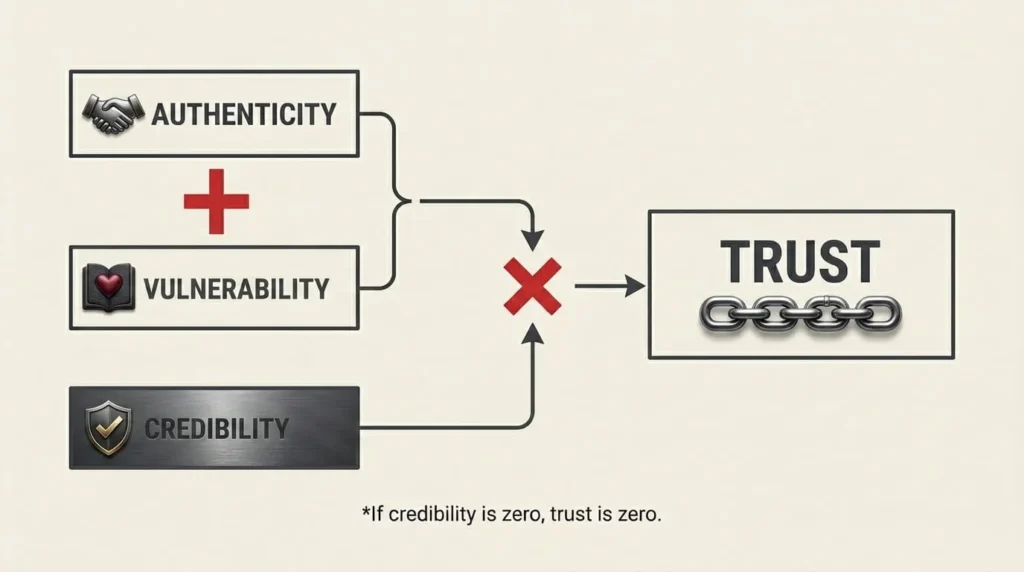
Professional relationships run entirely on trust. Coach Brandon Smith frames this dynamic through a simple formula: trust grows from your authenticity and appropriate vulnerability, multiplied by your credibility. Credibility is the currency you earn by meeting deadlines, keeping promises, responding quickly to messages, and delivering high-quality work. Vulnerability does not mean sharing personal drama. At work, vulnerability is simply admitting when you do not know something, owning your mistakes, and asking a teammate for help before a deadline slips.
Because credibility is a multiplier, if your credibility is zero, your total trust score drops to zero—no matter how authentic or vulnerable you are.
Google proved the value of trust during a massive two-year study of 180 teams. Researchers discovered that psychological safety—the shared belief that you can ask questions, suggest wild ideas, and admit mistakes without facing humiliation—was the single greatest predictor of team success. People perform at their best when they feel safe being themselves.
Your professional network will expand as you gain experience, education, and credentials. You do not need hundreds of superficial social media connections. Instead, focus on building a small circle of colleagues who will tell you the truth, combined with enough broader contacts to keep you informed about new opportunities.
Reflective Growth and Next Steps
Your career development is a lifelong process of learning, adapting, and pivoting. Schedule regular check-ins with yourself to audit your strengths, track your skills, and identify gaps that need filling. Treat this self-assessment as routine career maintenance, much like updating your resume after earning a new certification.
To prepare for future opportunities, draft a concise professional pitch. Use this simple structure to introduce yourself during interviews or networking events:
As a [previous role], I [key responsibility], which taught me [transferable skill]. I look forward to using this skill on day one as your next [new role].
Customize this framework with your real-world achievements. When an interviewer says, “Tell me about yourself,” this structured bridge will help you speak with confidence instead of rambling.