How to Spot a Scam in Canada
In the past, information about your bank transactions, credit card transactions, investment statements, and other financial paperwork came through paper documents. People were told to keep these documents safe or shred them when they were not longer needed. Today, the majority of our financial records can be accessed online. Apart from a few paper records, everything you need to know can be accessed from nearly anywhere in the world, instantly.
While online access definitely makes our record keeping simpler and eliminates a paper trail, we now need to ensure that we are the only ones who can access our online financial records. Fraud and identity theft are growing problems, impacting millions of people each year.
This lesson covers how to recognize and prevent scams and fraud, as well as the consumer protections available in Canada when a business breaks the rules.
Types of Fraud
Not all fraud is created equally – these are the most common scams to watch out for, followed by what you can do to protect against it.
- Theft – This occurs when a fraudster gains access to your personal or financial information and uses it to steal money or make unauthorized purchases. For example, someone may access your bank account, transfer money, or use your credit card information to make purchases. Keeping your accounts and personal information secure can help reduce this risk.
- Identity Theft – Identity theft occurs when someone obtains enough personal information to pretend to be you. This could include your name, address, date of birth, Social Insurance Number (SIN), banking information, or other identifying information. A fraudster may use this information to open accounts, apply for credit, access government benefits, or commit other forms of fraud in your name.
- Deceptive Business Practices – This occurs when a business uses false, misleading, or unfair practices, such as misrepresenting a product, failing to honour certain agreements or guarantees, or improperly charging a customer. Unlike account theft, these situations may require help from a consumer protection agency or another dispute-resolution process.
Forms of Consumer Protection
Consumer protection in Canada takes several forms. Prevention and education help consumers recognize scams and understand their rights before problems occur. Laws and regulations establish rules that businesses must follow, while government agencies and consumer associations provide information, guidance, and support. When a dispute cannot be resolved directly with a business, consumers may also have access to remedies through formal notices, dispute-resolution processes, or the courts.
For information about consumer protection agencies and resources in the United States, see Protect Yourself as a Consumer. Canadian courses should use this lesson for information about Canadian consumer protection.
Consumer Rights in Canada: Quebec Example
Consumer protection laws in Canada vary by province and territory. In Quebec, consumers have protections covering areas such as contracts, credit, guarantees, pricing, business practices, and certain door-to-door or itinerant merchants.
The Consumer Protection Act establishes many of the rights and obligations that apply when consumers purchase goods or services from merchants in Quebec. The Consumer Packaging and Labelling Act establishes federal requirements related to accurate and meaningful information on many prepackaged consumer products. The Travel Agents Act establishes requirements for travel agents and related consumer protections in Quebec.
Consumers may also encounter the Scanner Price Accuracy Code, a voluntary policy followed by participating Canadian retailers. When a participating retailer scans an eligible item at a price higher than the displayed price, the consumer may be entitled to receive the item free or receive a discount, depending on the item’s price and the policy’s conditions. For example, if an eligible $8 item scans at $10, the policy may allow the customer to receive that item free.
Who Can Help
Different organizations can help depending on the type of consumer problem. In Quebec, the Office de la protection du consommateur (OPC) provides information about consumer rights and responsibilities and helps consumers understand the steps they can take when dealing with a merchant.
Housing and lease disputes are handled through Quebec’s housing tribunal, the Tribunal administratif du logement (TAL), formerly known as the Régie du logement. Consumer associations can also educate consumers, provide guidance, and advocate for consumer interests.
Asserting Your Rights
If you have a problem with a product, service, or contract, start by contacting the business and giving it an opportunity to resolve the issue. If the problem continues, you can generally take further steps:
- Contact the business’s customer service department.
- Contact an ombudsman or other dispute-resolution service, if one is available.
- Send a formal notice explaining the problem, the solution you are requesting, and a reasonable deadline for the business to respond.
- If the dispute remains unresolved and qualifies, consider filing a claim in Small Claims Court.
For a dispute involving a Quebec merchant or consumer contract, the OPC can provide information about your rights and possible next steps. If someone has impersonated you, accessed your accounts, or stolen your identity, follow the fraud recovery steps later in this lesson instead.
Merchant Responsibilities
Businesses also have responsibilities when dealing with consumers. Depending on the applicable laws and circumstances, these can include providing accurate pricing information, respecting applicable refund and guarantee requirements, protecting confidential customer information, and avoiding false or misleading advertising. Meeting these responsibilities helps businesses maintain customer trust while complying with consumer protection requirements.
Keeping Your Information Safe
When it comes to identifying information such as your birthdate, Social Insurance Number (SIN), bank account numbers, and passwords, remember that scammers may try to obtain this information to commit fraud. A caller, email, or text message may claim to come from a trusted organization such as the Canada Revenue Agency (CRA), Service Canada, or your bank. Scammers impersonate these organizations because people are more likely to trust them and provide personal information.
Be cautious whenever someone unexpectedly asks for sensitive information or payment. The CRA will not demand payment through gift cards or cryptocurrency. Your SIN is particularly sensitive and should only be provided when it is legally required or there is a legitimate need for it.
For more information about legitimate CRA communications and filing taxes, see The Basics of Filing Taxes in Canada.
Never, Ever Give Out Your Password
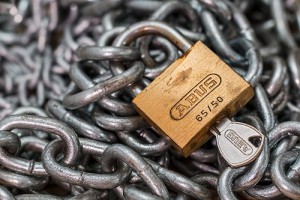
Never give out your password. This may seem obvious, but it remains the most common way that you allow someone access to your account. An agent of a financial institution will never ask for your password. Employees whose job responsibilities include helping customers can access your accounts using their own administration tools. Some companies will ask you to set up security questions to reset your own password if you forget what you chose. Other companies will ask you to choose a PIN number so that if you need help with your accounts, the PIN acts as another layer of security.
Create different passwords for your accounts. Never use the password to your banking information on a website where you shop. Some websites let their staff see your password or they store your password in such a way that it can be decoded easily. In the past five years, the news has reported stories of retailers or websites that were “hacked.” This means that someone got unauthorized access to the website information, often including customer account information. The hackers can then use the customers’ personal information in illegal ways. Since people often use the same email address or username for different online accounts, hackers who have stolen your personal data will try the same username and password combination they stole from one site to get access to other sites.
The best approach includes creating unique passwords for each of your accounts and updating your passwords every few months.
Keep Your Credit Card Number Safe!
“Hello, this is Jameson calling from Visa. Would you mind verifying your credit card number for me?” Identity thieves often call and claim to be from the CRA, Service Canada, your bank, a utility company, or another organization you may trust. Why? Because these are organizations you trust and they are hoping you’ll let your guard down and give them your credit card number.
This type of fraud also happens online through emails where you are asked to click a link and verify your information for your bank account, your Paypal account, your Apple account, etc. These emails often ask for personal information in an effort to steal your login credentials or card information. The links may even look very realistic.
Just remember, if you weren’t the individual who initiated the phone call or the email, don’t give out your credit card number. In all cases, call your financial institution to verify that they needed to reach you, or in the case of an email, report it as spam.
Other Security Measures

Most financial institutions and other retailers now have multiply layers of security in place to protect you and your accounts. If you try to reach your online bank account and you are using a device that the bank’s server doesn’t recognize, such as a new computer or a computer at the hotel you are visiting, the bank will want to verify that you, the account holder, is truly the one trying to access the account. The bank will send you a temporary PIN number via text, a phone call, or an email, and you will need to enter that information online in order to complete your login process.
Most credit cards now include a chip and a CVV code. The chip means that when you use your card at a retailer, your account information is scrambled, making it harder for the information to be stolen. The CVV code (card verification value) protects your card number from being used in online transactions unless that code is also provided.
One security measure you need to be aware of is the way you share personal information on social networking sites. If you post too much information about yourself, an identity thief can “uncover” key pieces of information about your life and use it to answer the “challenge questions” on your accounts.
Who CAN You Share Your Information With?
In the normal course of doing business, an organization may need certain personal information about you. For example, your employer requires information for payroll and tax purposes, and some government programs and financial institutions may require your Social Insurance Number (SIN) for specific purposes. However, you should not provide your SIN simply because a business asks for it. Ask why the information is required, how it will be used, and whether another form of identification can be provided instead.
The decision to share your key personal information is yours to make. Ask questions before deciding to share it. Ask why they need that information, how it will be used, how they will protect it, and what happens if you decide not to share. After all, it’s your identity at stake.
What To Do When Disposing Of Your Devices

Computers, smartphones, tablets, cameras, and other devices can contain large amounts of personal information. Before you sell, donate, recycle, or dispose of a device, follow Canadian cyber-safety guidance and make sure personal information has been securely removed. Depending on the type of device:
- For your Smartphone or Tablet, perform a hard reset. This returns the device to its original factory settings
- For your digital camera, gaming console, or media players, perform a factory reset and remove the memory cards from the systems.
- For your computer, securely erase or wipe the hard drive using the device’s built-in secure erase features or trusted data-erasure software. If the device cannot be securely erased, consider using a professional electronics recycling or data-destruction service
Whatever method you choose, just remember that your goal is to keep your personal information safe so that your accounts are not compromised, leading to potential theft or fraud.
Risky Behaviors
Most “hacks” really come down to social engineering, or convincing you to make a mistake that lets a fraudster steal your data. These are common types of risky behavior, and how they open you up for potential fraud:
- Sharing Passwords. No reputable business will EVER ask for your password over the phone or by email – only you should know your passwords, and nobody else.
- Re-Using Passwords. This is another red flag – you should do your best to use different passwords for every institution you work with. It may be that your bank account has the world’s best password security and is completely un-hackable. But if you use the same password on a knockoff photo sharing website, that site could be hacked and the hackers try the email addresses/passwords they stole on banking and other financial websites. This is the source of most “hacked” data.
- Panicking Over The Phone. Phone-based scams are hugely on the rise, which generally operate by convincing you that you are either in trouble or some service you use is about to expire. In both cases, the fraudster’s goal is to get you to panic and reveal financial or sensitive personal information that can be used to steal valuable information, or just login information to steal money directly.
- Revealing Information Online. Many fraudsters impersonate your friends or family online in an attempt to get you to let your guard down. Always avoid revealing too much personal information online, especially if you are not 100% sure of the identity of the people you are talking to.
- Paying Before Verifying a Seller. Be cautious when a seller pressures you to pay immediately, particularly in door-to-door sales, online marketplaces, or other situations where you have not verified the business or individual. Take time to confirm who you are dealing with, understand what you are buying, and review the terms before sending money.
What To Do If Something Goes Wrong
Fraud, Scams, or Identity Theft
If you have been the victim of fraud, a scam, or identity theft:
- Contact your bank or financial institution immediately if your accounts or payment information may be affected.
- Report the incident to your local police when appropriate.
- Report fraud or scams to the Canadian Anti-Fraud Centre.
- Contact Equifax and TransUnion if your credit information may have been compromised and ask about fraud alerts or other protective measures.
- Contact the Canada Revenue Agency (CRA) if your SIN or tax information may have been compromised.
- Call 1-800-O-Canada for information about replacing government identification or finding the appropriate government service.
- Keep records of suspicious transactions, communications, reports, and the steps you have taken.
For more information about fraud alerts, credit reports, and disputing incorrect information, see Your Canadian Credit Report.
Problems With a Merchant or Contract
If the problem involves a purchase, contract, guarantee, pricing issue, or other dispute with a business:
- Keep receipts, contracts, advertisements, emails, and other documentation.
- Contact the business in writing and clearly explain the problem and the solution you are requesting.
- In Quebec, consult the Office de la protection du consommateur (OPC) for information about your rights and possible remedies.
- If the issue cannot be resolved, consider sending a formal notice and, if appropriate, pursuing the matter through Small Claims Court.
Challenge Questions
- Why are your personal details valuable to hackers?
- How can you be affected when your private information gets into the wrong hands?
- Have you or anyone you know ever been a victim of fraud. If so, explain how it could have been prevented.
- Give three pieces of advice that you would pass onto someone younger than you, on how you can protect yourself against fraud and scammers.
- What is the difference between the Office de la protection du consommateur (OPC) and the Canadian Anti-Fraud Centre, and when might you contact each one?
- What is one step you can take if you cannot resolve a consumer dispute directly with a business?
- In your own words, explain how the Scanner Price Accuracy Code can protect a consumer when an eligible item scans at a higher price than the displayed price.