5 Ways to Assess Business Risk
Risk Management is when a manager tries to organize his company (or business unit) to prepare in case of, and try to prevent, something going wrong. Risk management is one of the most complicated branches of management, as it requires managers to be able to assess unknown situations and try to be prepared for anything. It is the technique of distinguishing, investigating, and acknowledging uncertainty and speculation management choices. Essentially, risk management occurs whenever a financial specialist or fund manager analyzes and tries to determine the potential for loss in any given situation, and later makes the appropriate action to try to minimize that risk.
Internal versus External Controls
Tools for Risk Management are usually divided between Internal Controls, meaning tools to prevent problems coming from inside the organization, and External Controls, which means preparing to face threats and problems coming from somewhere else.
Internal Controls
Internal Controls are the procedures and processes in place at an organization to make sure everything operates smoothly and mistakes stay rare. This includes things like building Standard Operating Procedures (SOPs), Quality Assurance (QA), and Auditing. It also includes checks and investigations to make sure those SOPs and QA processes are being followed properly, not just unused documents. Most of the examples in this article will focus on internal risk management.
External Controls
External controls help businesses prepare for risks that come from outside the organization. One of the most common tools for assessing these risks is PESTEL analysis, which examines the Political, Economic, Social, Technological, Environmental, and Legal factors that shape the business landscape and influence which types of businesses are likely to succeed in a market.
Political factors include government policies such as taxes, subsidies, trade policies, mandates, bans, and political stability. These decisions can encourage or discourage business activity and affect whether a market is attractive for certain industries.
Economic factors include economic stability, household income, inflation, unemployment, and interest rates. These conditions influence consumer spending, business costs, and overall demand for products and services.
Social factors include demographics, cultural norms, lifestyle trends, and population growth. Changes in society influence consumer preferences and determine which products and services are in demand.
Technological factors include internet access, automation, production technology, and the pace of innovation. These factors affect how businesses produce goods, distribute products, and communicate with customers.
Environmental factors include geography, climate, access to renewable and nonrenewable resources, waste management policies, natural disasters, and consumer attitudes toward environmental responsibility. These factors can affect production, distribution, and customer purchasing decisions.
Legal factors include employment laws, consumer protection laws, health and safety regulations, environmental regulations, intellectual property protection, and antitrust laws. These laws affect operating costs and determine which business activities are legally permitted.
Businesses use PESTEL analysis to identify opportunities and risks before entering a market or expanding into a new one. After evaluating each factor, a business can decide whether to enter the market, adjust its strategy, or avoid the opportunity altogether.
Using PESTEL to Make Business Decisions
Businesses often follow a simple process when using PESTEL analysis. First, they identify which PESTEL factors are most important for their business idea. Next, they determine whether each factor represents an opportunity, a risk, or a combination of both. Finally, they decide whether to move forward with the business idea, modify their plan, or avoid entering the market.
For example, someone planning to open a food truck might find that social trends support local street food, but environmental factors such as harsh winter weather and legal requirements for food permits create challenges. After considering all of the PESTEL factors, the owner may decide to enter the market with modifications, such as operating seasonally or expanding into catering during colder months.
Nature of Internal Risk Control
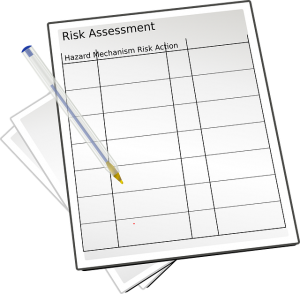
Internal Risk Control is what a manager and organization put in place to minimize risks coming from inside the organization. These controls fall into 4 broad categories:
- Monitoring: These are controls put in place to keep an eye on operations and identify problems before they escalate
- Control Environment: This means organizing the workplace to minimize risk. This can be anything from a factory installing safety equipment to the IT department putting up firewalls to protect against viruses.
- Information and Communication: This is the establishment of regular reports and communication channels between departments, workers, and managers. Sometimes workers and managers believe they have a problem “under control”, but it could be on the verge of spiraling into disaster – good communication and reporting helps prevent this from happening.
- Risk Valuation: This is the method that an organization uses to put a dollar amount on how much risk each aspect of operations is adding to the whole.
Risk valuation is the most tricky, but also the most important. Each organization has finite resources that it needs to spread to minimize risk as a whole, and this valuation process helps guide those efforts. At the same time, every time a company adds more monitoring, controls, and reporting duties to its staff, the staff spend more time focusing on risk management, and less on what generates revenue. Every time a new internal control is imposed, it must be balanced with the cost it imposes on the team it is trying to protect.
Internal risk control is done at every level of management. The lowest-level managers are trying to minimize the risks inherent to their team in meeting their objectives, while higher levels of management examine risks running throughout the organization as a whole. Effective controls are also bottom-up as well as top-down, by adding direct avenues of communication from rank-and-file workers to report any time they believe internal controls are being disregarded, or if new controls may be necessary to address new risks.
Contrast with External Risk Control
External risk control is more free-form, since the risks from outside an organization cannot be quantified quite as easily. This usually starts with a SWOT analysis (Strengths, Weaknesses, Opportunities, and Threats), and focuses on addressing the Threats identified. External Risk Control is usually addressed by the higher level managers, who then issue directives to the lower levels of management to address these risks.
Businesses also evaluate the competitive environment when assessing external risk. One important consideration is the threat of new entrants. If barriers to entry, such as high startup costs, government regulations, patents, limited supplier access, or economies of scale are low, new competitors can enter the market more easily and increase competition.
Businesses should also assess supplier power, or the ability of suppliers to increase the prices of raw materials or components. Supplier power is strongest when there are few suppliers available and switching to another supplier would be difficult or expensive.
Finally, businesses evaluate the threat of substitute products. Substitute products satisfy the same customer need in a different way. The threat is highest when customers can easily switch to alternatives that are less expensive, more convenient, or higher quality.
While internal controls are put in place to ensure the organization continues to operate smoothly, external risk controls try to address threats to the business itself. For example, airlines are always at risk for the price of oil going up, which causes a huge spike in their operating expenses. One major form of external risk control they exercise is purchasing oil futures, which locks in a set price for several months in the future, removing some uncertainty. External risk controls try to look at everything from input prices changing to new laws and regulations being passed, and everything in between.
Businesses should regularly reassess external risks because markets constantly change. New technologies, changes in consumer preferences, economic conditions, government policies, or environmental events may create new opportunities or risks. Reviewing these factors regularly helps businesses adjust their strategies before problems become more serious.
Ways to assess risk
Risk evaluation has no settled guidelines on how it ought to be done. However, there are a couple of general rules that are followed. Businesses often use secondary research to better understand external risks before making decisions. Industry reports, government publications, competitor websites, trade associations, and market research reports provide valuable information about the business landscape. Businesses may also use bar charts and other graphs to compare information such as sales, market share, or competitor performance.
There are five stages to risk evaluation that can be taken to guarantee that risk appraisal is completed accurately. These five stages are:
Stage 1: Detecting the hazards

Before a risk can be assessed, the first step is identifying what exactly that risk is. The goal of Step 1 is to have a clear and concise definition of what exactly the potential problems are and what kinds of damage might be caused. For example, dangerous machines in a workplace have a defined risk of harming workers, which both loses productivity and results in lawsuits.
Many hazards are initially very vague, but effective controls cannot be put in place until the managers identify what exactly they are trying to control. Hazards can be recognized by utilizing various diverse procedures, for example, strolling around the work environment or asking the workers. A few hazards might be anything but difficult to distinguish and others may require some help from different experts outside of one’s business.
Stage 2: Identifying the stakeholders
This stage builds on the hazards and risks found in stage one. A problem in the workplace has a few different levels of stakeholders. For example, with dangerous machinery, the workers at risk of being injured are obvious stakeholders. Additional stakeholders would be the other units of that business who will be put behind schedule if there is an incident earlier in the production chain. It will also impact the families of those who might be injured, as well as the stockholders of the company who may pull their investment in light of the bad press following an injury.
Stage 3: Evaluating the dangers and choosing control measures
Evaluating the dangers means trying to assign some probability of how likely the hazard is to occur. No hazard can be completely eliminated – only minimized. This means businesses first identify how likely a problem will arise from that hazard, and how much potential control measures will lower that possibility.
Potential controls are evaluated by balancing their cost to implement (both in dollar value and how much time/effort of the staff it will take to enforce the control) with how much risk is actually reduced. Once several alternatives are compared, new controls can be introduced.
Stage 4: Record the findings

Effective controls are implemented on a trial basis. This means the team has a training session to outline what the hazards are and the new controls being implemented to address them. While the trial progresses, the entire team (from rank-and-file workers through the management involved) record how the implementation impacts their work, both in terms of actually addressing the risks the controls are addressing and the realized cost of implementing them.
Step 5: Review the assessment and refresh
Risk controls need to be continually reviewed for effectiveness and refreshed, with corresponding communication to all the stakeholders involved. This is usually done by the management team, with a specific “Assessor” tasked with conducting a review or audit of the control and how it evolves over time. Changes need to be implemented to every type of control over time to address new risks and changing business environments.
Risk assessment is an ongoing process rather than a one-time activity. Businesses should regularly ask what has changed, how those changes affect customer demand, operations, resources, or costs, and what actions should be taken in response.
Business Viability
PESTEL factors influence whether a business is practical and profitable in a particular market. Technology can reduce costs through automation, while environmental conditions such as climate or natural disasters may make production and distribution more difficult. Legal requirements may increase operating costs through additional licensing or compliance requirements. Understanding these factors helps businesses determine whether an idea is realistically achievable before investing significant time or money.
PESTEL and Career Opportunities
PESTEL factors influence not only which businesses succeed in a market but also the jobs available within that market. For example, advances in technology may create more careers in software development and cybersecurity, while environmental regulations may increase demand for renewable energy specialists. Economic downturns may reduce opportunities in some industries while creating growth in others, causing changes in job availability over time.
Importance of auditing risk control

Audits are larger reviews of the internal risk controls that a company has implemented. Audits are separate from the normal risk assessment procedures, but do follow a similar road map for how they are conducted.
Regular audits of internal risk controls are essential to keep an organization running smoothly. Their two major benefits are making sure that the internal controls are being implemented as designed, while also getting a “bird’s eye view” of the overall controls in an organization. This bird’s eye view can help identify redundancies with the internal controls, and streamline the processes, making them cheaper, easier, and more effective.
Risk Identification and Assessment
This is the same as Step 1 through Step 3 in the normal Risk Assessment, but looks at the business operations as a whole, rather than individual business units. The purpose is to identify what risks are present, and what controls already exist to address those risks. If adequate controls are not present, the auditing team will make recommendations to the relevant stakeholders to fix it.
Comparing Business Ideas
Consider two businesses opening in the same city: a food truck and an online tutoring company. The food truck faces environmental risks such as bad weather, legal requirements for permits, and rising food costs. The online tutoring company depends more on internet access and technology but has lower operating costs and fewer environmental risks. Although both businesses operate in the same market, a PESTEL analysis may show that one business is a better fit for current market conditions than the other.
Enhanced Process Efficiency and Effectiveness
This is the process of trying to harmonize the internal risk controls already implemented across an organization. The main goal of these exercises is to try to make it easier for business units to maintain effective controls. This usually means merging SOPs from different business units, enhancing communication channels, and getting more input from managers about what types of controls are eating the most of their time. Effective internal control audits mean workers need to spend less effort on compliance, and more effort building value for the business, without sacrificing protection against risk.