How to Price Your Products & Services
A pricing strategy is the approach a business uses to determine how much to charge for a product or service. Setting the right price is one of the most important decisions a business makes because it affects its ability to attract and retain customers, generate revenue, and earn a profit. While a lower price may help a business gain market share, a product cannot be profitable if its selling price is equal to or lower than the per-unit cost of producing and distributing it.
When developing a pricing strategy, businesses consider factors such as customer demand, competition, production costs, and the value customers place on the product. A company could have a great product and a fantastic promotional campaign, but still struggle if the price doesn’t match customer expectations or the company’s financial goals.
This article discusses how supply and demand and price elasticity influence pricing decisions, explains several common pricing strategies and when businesses use them, explores how pricing power affects a company’s ability to set prices, and concludes with the impact of technology and legal considerations on pricing.
General Price Concepts
Supply and Demand
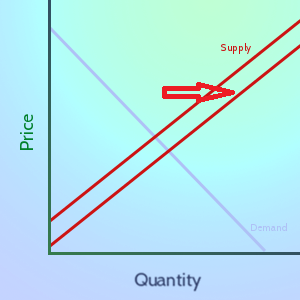
Supply and demand are among the most basic factors on market price for goods, and often an individual firm has little control over them. When there is an oversupply of a product in the market, assuming constant demand, the price of the good will decrease as firms attempt to unload their excess of inventory. Companies that refuse to lower price during a period of oversupply can be punished with huge drops in sales and a buildup of inventory they can’t get rid of. Oil is a prime example of an industry that is currently in oversupply—increased production has led to prices falling from well over $100/barrel down to around $50/barrel today.
Likewise, any decrease in demand with no change in supply will also result in lower prices. With less aggregate customers, companies are forced to fight harder to win the demand of each customer, and this fierce level of competition leads to price decreases. During a recession, like the one that happened in 2008, demand often falls for a wide variety of goods as consumers are tighter with their spending, and this forces companies to cut prices.
To learn more about Supply and Demand, along with examples of how it works, read our article about Supply and Demand Examples in the Stock Market.
Price Elasticity
The basic impact that a company has in controlling their pricing is upon the quantity demanded by consumers. If prices are raised, less customers will buy the product and if prices are lowered, more customers will buy. Price elasticity concerns the relationship between the degree of the price increase (decrease) and the degree of the following drop (boost) in sales.
Price elasticity of demand measures how responsive customers are to changes in price. Businesses facing more elastic (responsive) demand have less flexibility to raise prices because customers are more likely to reduce purchases or switch to competitors. Businesses facing more inelastic (less responsive) demand generally have greater flexibility to increase prices with less impact on sales volume.
Calculating price elasticity is beyond the scope of this course, but understanding the concept helps explain why some businesses can raise prices more easily than others.
Inelastic demand is the exact opposite; for any change in price, the percent change in demand is lower. So when goods are price inelastic, management should increase prices because the additional profit will outweigh any drop in quantity demanded. Luxury goods like diamonds are price inelastic because customers tend to be less price sensitive when they are spending on something that is essentially a status symbol of wealth. Also, goods with very few substitutes like gasoline and tap water are typically price inelastic because consumers do not have the ability to switch to another product; they are forced to pay the higher price.
Pricing Power
Pricing power is a business’s ability to increase prices without losing a significant number of customers. Businesses operating in highly competitive markets with many similar products usually have little pricing power and may need to keep prices low. In contrast, businesses that sell highly differentiated products or operate in less competitive markets often have greater pricing power because customers are willing to pay more for what they offer.
Businesses whose customers are highly responsive to price changes generally have less pricing power. Although lowering prices may increase sales volume, the additional sales may not always offset the lower price, potentially reducing overall revenue and profit.
Common Pricing Strategies
Below is a description of some of the most widely used pricing strategies:
Cost-Based Pricing
Cost-based pricing sets the selling price by adding a markup to the per-unit cost of producing and distributing a product. The goal is to achieve a desired per-unit profit (selling price minus per-unit cost), rather than primarily considering customer perceptions of value or competitors’ prices. This approach is common in industries with clearly defined costs, such as construction contractors or custom service providers, where customers often receive quotes showing labour, materials, and other expenses.
Competitive Pricing
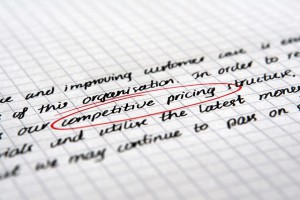
Competitive pricing sets prices based primarily on the prices charged by competitors, a practice often called price matching. If a business believes its product offers unique features or superior quality, it may charge a premium above competitors. If the product has few distinguishing features, the business may price at or below competitors to gain market share, even if it results in lower profit per unit.
Value-Based Pricing
Value-based pricing sets prices according to the value customers believe the product provides rather than its production cost or competitors’ prices. Businesses selling highly differentiated or uniquely valuable products often use this strategy because customers are willing to pay more for benefits they perceive as worthwhile. Luxury brands, innovative technology products, and premium services frequently rely on value-based pricing.
Line
Line pricing is when a company offers products at several different levels of quality (typically low, medium, and high). Pricing is set to reflect the relative quality of each offering, so the low-quality product would be at a discount price, the medium product would be at an average price, and the high-quality product would be at a premium price. The iPad is an example of this strategy—customers have the choice of buying a very basic model or they can pay several hundred dollars more to get one with higher quality and better features. As its name indicates, the line strategy is effective when a firm has a product line with several items that have a distinct difference in quality level. Segmented pricing can help clarify to consumers the added value that buying a better model entails and it provides customers some flexibility on deciding how much they want to spend.
Loss Leader
The loss leader strategy involves a company selling certain items at a loss in order to bring customers into the store. The assumption is that once customers are tempted into the store, they will have a tendency to buy other things as well that will generate the profit for the company. One very basic example of this are restaurants that sell kids’ meals for very cheap (even for free sometimes). The restaurant loses money on the kids’ meal, but makes their profit when the adults accompanying the children have to order full-price meals. This can be an effective strategy to generate store traffic, but firms must be careful to make sure that customers actually are buying products besides just the loss leaders.
Psychological

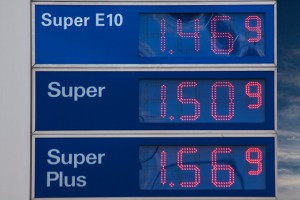
Psychological pricing is an approach where prices are set based upon a psychological reaction that they will cause consumers. The ultimate goal of this tactic is to increase sales without significantly reducing prices. The most common example of this is when retailers price items one penny below an even dollar amount, $9.99 instead of $10 for example. Customers associate the $9.99 with the lower dollar amount of $9 rather than actively realizing that it is just one cent below $10. The massive usage of that tactic alone illustrates the success psychological pricing can have. It can be effective both for relatively low cost goods like gasoline or for big purchases like cars– $19,999.99 for some reason just seems a lot cheaper than $20,000.
Penetration
Penetration pricing is when a business introduces a product at a low introductory price—sometimes even below its per-unit cost—to attract price-sensitive customers away from competitors and quickly gain market share. Once customers have adopted the product and the business has established a strong position in the market, prices are gradually increased. Netflix is often cited as an example because it introduced its service at a relatively low monthly price before gradually increasing subscription fees as its customer base grew. One challenge of this strategy is that customers may resist later price increases after becoming accustomed to the lower introductory price.
Skimming
Skimming is sort of the opposite of the penetration strategy. In the skimming strategy, companies introduce products at a high initial price—often the highest price they think that customers would be willing to pay. Then, once the initial demand is satisfied, the firm lowers prices to capture a new group of consumers. This process can continue through several price decreases. The skimming strategy is often used by startups that have a brand-new, unique product. Through the early high pricing, these companies try to get as much profit as they can before competitors step in and force price cuts. One problem with skimming is that it entices competition to the market as rival firms perceive an opportunity to undercut the original company’s product.
Impact of Technology

Technology has led to a very different environment for pricing than has been the norm in the past. With an increased ability to quickly “price-check” online, customers have become more sensitive to prices and it is more important to either be priced below competitors or to clearly communicate the brand’s superiority to consumers. It is also easier for customers to switch brands in that they can shop online and avoid having to travel to multiple stores to find the best deal. In these ways, additional power has shifted to the consumer in determining the way prices are set.
With a shift towards e-commerce, new factors are added into a company’s pricing decisions. One key issue is shipping—will the business charge customers for shipping or cover the cost themselves? With Amazon offering free shipping on many items through its Prime service, there is additional pressure on companies to lower price through the shipping aspect. Overall, the emergence of online shopping has resulted in much lower prices through this type of direct, easily-comparable competition.
Legal Constraints on Pricing
Businesses must also consider laws that regulate pricing practices.
Collusion occurs when competing businesses agree to charge the same price instead of competing. Because this reduces competition and often leads to higher prices for consumers, it is illegal in many countries, including the United States.
Price gouging is the practice of dramatically increasing prices during emergencies or crises when consumers have little choice but to buy essential goods. Many U.S. states and other countries prohibit price gouging during declared emergencies.
Price discrimination refers to charging different prices to different customer groups for the same product. While some forms of price differentiation are legal (such as student or senior discounts), charging different prices based on protected characteristics such as race, nationality, or sex is illegal.